
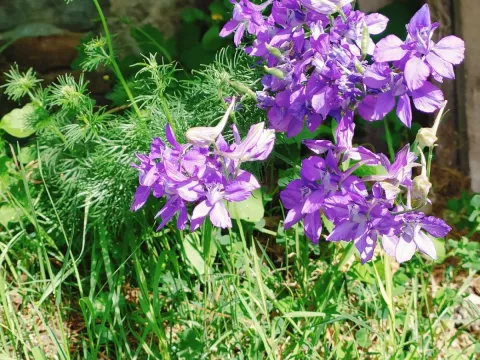
Rocket larkspur
Delphinium ajacis
Rocket larkspur (Delphinium ajacis) belongs to the Ranunculaceae family and is a popular annual garden plant. Seeds are typically sown directly into the soil in early spring or late autumn for wintering.
What the section contains
Rocket larkspur
Optimal spacing is crucial for development, requiring 20 to 30 cm between plants to ensure good airflow. Seeds should be sown at a depth of 0.5 to 1 cm to ensure adequate germination conditions.
Spring sowing results in mid-summer flowering, whereas autumn sowing promotes earlier and more vigorous growth. This flexibility allows growers to schedule production based on climate conditions.
Germination is most successful when soil temperatures are between 15°C and 18°C. Providing consistent moisture during the initial weeks is necessary for establishing strong seedlings.
Young seedlings should be thinned to remove overcrowded specimens, allowing the remaining plants to reach their full potential size and flower density.
This species thrives in well-drained, fertile, loamy soils with a neutral or slightly alkaline pH. Proper site selection is vital as it prefers full sun but can tolerate partial shade in hotter regions.
Consistent watering is required during dry spells, although the soil must never be waterlogged. Over-saturation quickly leads to root issues, making good drainage a primary requirement for success.
Mineral fertilizers should be applied twice during the season: once during initial foliage development and again when buds start forming. This practice encourages longer and more vibrant flower spikes.
Rocket larkspur is hardy and withstands light frost, making it suitable for a wide range of climates. Protection from strong winds is recommended to prevent lodging of the tall flower stems.
Maintenance tasks include light hoeing to control weeds and conserve moisture, taking care not to disturb the root zone. Mulching can also be used to maintain soil health throughout the growing season.
Powdery mildew is the most frequent disease, particularly in humid, still-air environments. Proper spacing and airflow are the best preventative measures against fungal infections.
Root rot occurs in poorly drained soils and can quickly kill entire crops. If symptoms appear, removing the affected plants immediately is essential to contain the spread of the pathogen.
Aphids and spider mites are common pests that target the young foliage and buds. Integrated pest management, including the use of targeted insecticides, is effective for controlling populations.
Slugs and snails can consume young sprouts during wet spring weather. Applying physical barriers or organic baits around the perimeter of the plot helps mitigate this damage effectively.
Note that all parts of the plant are toxic if ingested. Personnel should wear gloves during handling and maintenance to prevent skin or respiratory irritation.
For floral use, stems are harvested when approximately two-thirds of the florets on the spike are open. Morning harvesting ensures maximum hydration levels within the plant tissues.
Freshly cut stems should be placed immediately into clean water. Recutting the stems and changing the water every two days will extend the vase life of the flowers significantly.
To produce dried flowers, hang the spikes upside down in a shaded, well-ventilated location. Proper drying preserves both the color and the structure of the spikes for long-term use.
Seed harvesting should occur when the pods turn brown and begin to dry out. The pods are collected and stored in paper bags to allow for natural maturation and drying.
After threshing, seeds should be stored in a cool, dry, and dark environment. Under proper conditions, the seeds will retain high germination rates for at least two to three seasons.