
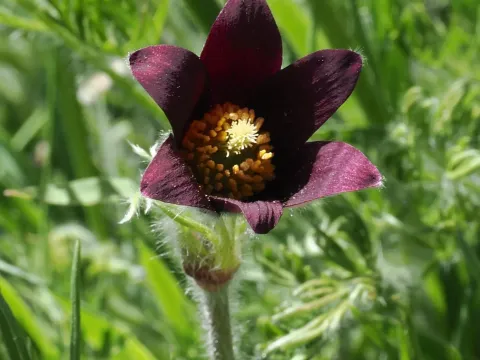
Red pasqueflower
Pulsatilla rubra
Sowing of Pulsatilla rubra seeds is best performed in late autumn in the open ground. This allows the seeds to undergo natural cold stratification, which is essential for successful germination.
What the section contains
Red pasqueflower
If sowing in the spring, seeds must be artificially stratified for at least 8–12 weeks at temperatures ranging from 2 to 5 degrees Celsius to break seed dormancy.
The planting depth should be shallow, about 0.5 centimeters, as the seeds require sufficient light to trigger the germination process effectively.
The substrate for sowing must be light, porous, and well-draining, consisting of a mix of horticultural sand, peat, and finely sieved compost to ensure optimal development.
Seedlings develop slowly, and patience is required as germination can be irregular, often spreading over several weeks depending on moisture levels and temperature stability.
The red pasqueflower is a perennial herb belonging to the Ranunculaceae family. It is naturally adapted to open, sunny environments with well-draining, rocky, or sandy soils.
Soil structure is critical; the species thrives in nutrient-poor but highly permeable soils where water cannot accumulate around the taproot, which is prone to rotting.
Regarding climate, this plant is remarkably cold-hardy, surviving harsh winters, provided that the soil is not waterlogged, which is the primary cause of plant loss.
Exposure to full sun is necessary for the plant to maintain its compact form and produce its characteristic dense, pubescent foliage and striking red flowers.
Fertilization should be kept to a minimum; excessive nitrogen application can lead to weak growth and increased susceptibility to diseases, so balanced slow-release fertilizers are preferred.
Root rot caused by Phytophthora or Pythium species is the most severe threat to the red pasqueflower, particularly in soils with poor drainage or during heavy rainfall.
Powdery mildew is a common foliar disease that may appear in late summer, especially if the plants are crowded and lack proper air circulation to keep the foliage dry.
Leaf nematodes can cause significant damage to the plant's development, leading to distorted leaves and stunted growth, which requires strict sanitation of the growing area.
Slugs and snails pose a direct threat to emerging spring shoots; regular manual control or organic deterrents are essential to protect the plant during its most vulnerable stage.
Integrated pest management, including monitoring and maintaining healthy soil conditions, remains the most effective strategy for ensuring the long-term vitality of the plants.