
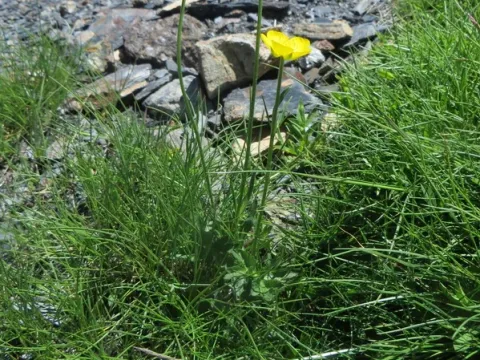
Roussillon buttercup
Ranunculus ruscinonensis
The Roussillon buttercup (Ranunculus ruscinonensis) is a herbaceous perennial plant belonging to the Ranunculaceae family. It is a rare, narrow-range species native to the Roussillon region of France, where it has evolved to thrive in specific limestone-rich mountain environments.
What the section contains
Roussillon buttercup
The species requires well-drained, porous soils to flourish, as its root system is highly sensitive to waterlogging. In an agronomic context, the plant performs best in locations that mimic its native alpine meadows, prioritizing sites with excellent air circulation and moderate temperature fluctuations.
Regarding climate, the Roussillon buttercup prefers cool to mild conditions and is vulnerable to extreme heat. It requires high light intensity for optimal growth but benefits from light shade during the peak of summer to prevent foliage scorching, especially in lowland cultivation settings.
Cultivation practices involve carefully monitoring soil moisture levels. Since the plant is not highly competitive against weeds, it is crucial to maintain a clean planting area using manual weeding or specialized substrates that discourage the rapid growth of invasive competitors.
Economic use of this plant is strictly confined to specialized horticultural sectors, such as rock gardens and botanical conservation projects. Due to its status as a rare species, it is not utilized in large-scale agriculture, but rather studied for its genetic and botanical value.
The primary threats to the health of the Roussillon buttercup include fungal pathogens, particularly root rot, which are often exacerbated by poor soil drainage. Such conditions create an ideal environment for fungi that can quickly destroy the plant's delicate root structures.
Common pests include aphids and leaf-sucking insects that target the soft tissues of the plant. If left untreated, these pests can severely weaken the plant, reducing its vigor and increasing its susceptibility to secondary infections from various pathogens.
Environmental stressors such as soil erosion and moisture imbalance represent significant external threats. Because this plant has a restricted natural range, sudden shifts in environmental conditions can pose a critical risk to its localized populations and cultivated specimens.
Effective pest and disease management in this species involves a preventative approach. Using sterile planting media and ensuring proper spacing between individuals can minimize the risk of pathogen transmission and facilitate better airflow through the foliage.
When necessary, treatment with specialized fungicides and insecticides must be approached with caution. Given the rarity of the species, trials with chemical inputs should always be conducted on a small scale to avoid phytotoxicity and potential long-term damage to the plant's health.