
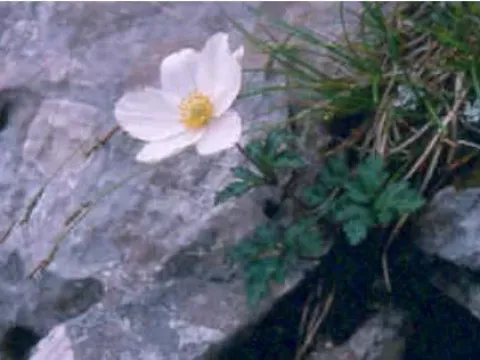
Rock anemone
Anemone rupestris
The rock anemone (Anemone rupestris) is a member of the Ranunculaceae family. It is a perennial herbaceous plant native to the high-altitude regions of the Himalayas, where it naturally colonizes rock crevices and stony slopes.
What the section contains
Rock anemone
Botanically, this plant is characterized by a compact basal rosette of pinnate leaves and slender flower stalks. The flowers typically feature white petals that may exhibit a distinctive purplish or bluish hue on the reverse side, adding to their ornamental value.
The species has very specific requirements for cultivation, primarily centered on drainage. It strictly requires a gritty, well-draining soil medium that prevents any moisture accumulation around the root neck to avoid physiological stress.
In terms of climatic preferences, the rock anemone thrives in cooler environments with high light intensity. It is best suited for alpine houses or rock gardens where the temperature remains moderate and the root zone stays relatively cool and airy.
Host use of Anemone rupestris is exclusively ornamental. Due to its challenging cultivation requirements, it is highly sought after by alpine plant enthusiasts and specialists for inclusion in rock gardens or specialized containers.
The primary threat to the rock anemone is fungal pathogen activity, which manifests as crown and root rot, usually triggered by poor drainage or stagnant atmospheric moisture during dormant seasons.
Pest pressures primarily involve mites and nematodes, which can cause severe damage to the foliage and stunted growth if early detection and intervention are not implemented.
Proper ventilation is a critical cultural requirement to prevent the onset of mildew and other moisture-related diseases that can quickly debilitate this species in non-native environments.
Regular sanitation of the plant by removing decaying basal leaves is a vital maintenance practice to ensure that the crown remains dry and free of potential fungal colonization sites.
Chemical control should be applied with caution; specifically, only light, systemic fungicides and acaricides should be used, as the plant can be sensitive to stronger concentrated agricultural chemicals.