
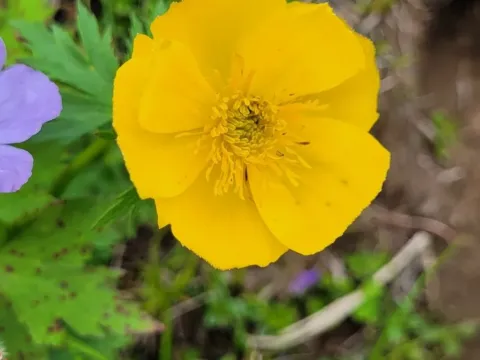
Rieder's globeflower
Trollius riederianus
Rieder's globeflower is typically propagated via seeds or by dividing mature clumps. Seeds require a long period of cold stratification, so autumn sowing directly into the soil is the most efficient and natural method for germination.
What the section contains
Rieder's globeflower
If sowing in the spring, seeds must be subjected to artificial stratification in a cold environment for at least two to three months. This process mimics the winter season and breaks the dormancy of the embryo, ensuring successful sprouting.
Seeds should be planted at a shallow depth of approximately 0.5 to 1 cm in a nutrient-rich, moist substrate. It is crucial to keep the soil consistently damp during the germination phase to avoid seed desiccation.
Division of established clumps is recommended every four to five years to rejuvenate the plant. The best time for this operation is late summer, allowing the root system to recover and establish itself before the ground freezes.
Seedlings grow slowly during their first year. Providing a clean, weed-free environment during the initial stages of development is essential to prevent the young plants from being outcompeted for nutrients and water.
Rieder's globeflower, a member of the Ranunculaceae family, is a perennial herb native to the Far East and Japan. It thrives in high-latitude environments and is well-adapted to cool, humid climatic conditions.
The plant requires moisture-retentive, fertile, and loamy soil to perform at its best. It does not tolerate prolonged drought, making irrigation a key factor in successful cultivation, especially during dry spells.
Partial shade is the ideal lighting condition. While the plant can tolerate some morning sun, exposure to intense direct afternoon light often leads to scorched foliage and premature dormancy, reducing its ornamental value.
Soil pH should remain in the slightly acidic to neutral range. Incorporating organic amendments such as compost or well-rotted leaf mold annually helps improve soil structure and moisture retention, mimicking the plant's natural habitat.
The crop is highly cold-hardy and requires minimal winter protection. It is an excellent choice for northern landscapes where heavy snowfall acts as an insulating layer, protecting the crown from extreme frost.
Fungal diseases such as leaf spot are common in humid conditions or where air circulation is restricted. Providing adequate spacing between plants is a vital cultural practice to minimize humidity buildup and fungal spread.
Root rot is a major threat in poorly drained soils. Preventing waterlogging is crucial; installing raised beds or adding drainage material to the planting hole can significantly mitigate the risk of pathogen accumulation.
Leaf nematodes pose a serious risk by feeding on the leaves, leading to yellowing, distortion, and stunted growth. Infected foliage should be removed and destroyed to prevent the spread of these pests to healthy plants.
Aphids may occasionally infest the plant, particularly in the spring when new growth is tender. Integrated pest management, including the use of horticultural soaps or biological predators, is recommended to control populations.
Slugs and snails can cause significant damage to young shoots in wet seasons. Implementing physical barriers, such as copper tape or crushed eggshells around the base, can protect the plant from these mollusks.