
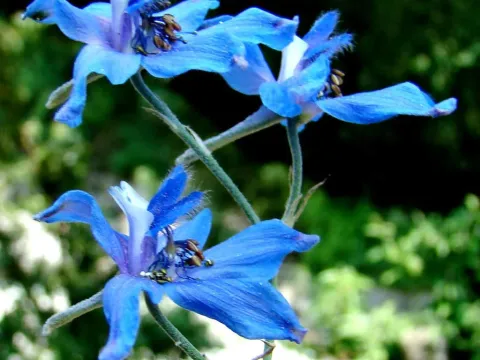
Royle's Larkspur
Delphinium roylei
Royle's Larkspur (Delphinium roylei) is a herbaceous perennial belonging to the Ranunculaceae family. It is native to the Himalayan mountain ranges, which explains its preference for cool alpine conditions and well-drained soils.
What the section contains
Royle's Larkspur
The plant thrives in locations with full sunlight but benefits from partial afternoon shade in regions with intense summer heat. The soil must be rich in organic matter and possess an excellent drainage system to prevent root waterlogging, which the plant cannot tolerate.
Regarding climate, Delphinium roylei requires a consistent moisture supply during the growing season while avoiding overly humid air. It prefers cool nights and moderate daytime temperatures, reflecting its original mountainous habitat.
Agricultural techniques involve regular feeding with balanced fertilizers in early spring to support the development of its signature tall flower spikes. Proper spacing is essential to ensure adequate air movement around the dense foliage.
In landscaping, this species is prized for its vertical architectural form, making it an excellent candidate for cottage gardens or perennial borders. Its blue-toned flowers attract various pollinators, adding ecological value to the garden environment.
Powdery mildew is a common threat, particularly in damp or stagnant air conditions. Improving plant spacing and avoiding overhead watering are effective preventive measures against the spread of fungal spores.
Slugs and snails present a significant risk to tender young foliage, especially during the spring season. Protecting young plants with physical barriers or organic bait is recommended to ensure the plant survives its initial growth phase.
Crown rot can quickly destroy the entire plant if the soil remains waterlogged for extended periods. Ensuring proper soil structure and avoiding heavy mulching directly against the crown is vital for long-term survival.
Aphid infestations may occur on the stems and flower buds, weakening the plant and potentially spreading viral diseases. Regular monitoring and the application of insecticidal soaps can help keep populations under control.
Nematodes are another hidden threat that targets the root system, causing stunted growth and yellowing of the leaves. Using sterilized soil or choosing resistant spots in the garden can mitigate the risk of nematode damage.