
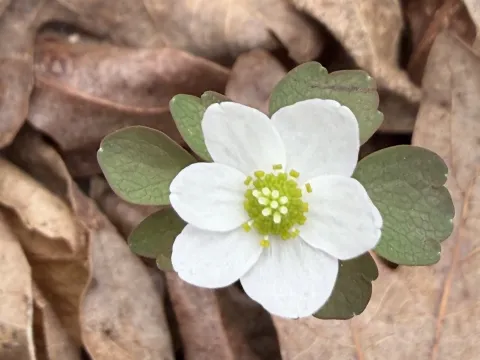
Rue anemone
Thalictrum thalictroides
Rue anemone (Thalictrum thalictroides), also known as Anemonella, is a perennial plant belonging to the Ranunculaceae family. It is native to the deciduous woodlands of North America, where it thrives under forest canopies.
What the section contains
Rue anemone
The culture prefers partial shade and environments that provide dappled light. Intense, direct sunlight can scorch the delicate foliage, making location selection crucial for the health and development of the plant during the growing season.
For optimal growth, the species requires loose, well-drained, and nutrient-rich soil. It thrives in slightly acidic to neutral soil conditions that simulate the natural leaf litter layer found in its native woodland habitats.
Climatically, the Rue anemone is a cold-hardy plant. It is well-adapted to temperate zones, though it requires consistent moisture and protection from extreme temperature fluctuations during dormant periods through mulch application.
Agronomic management involves maintaining steady soil moisture without creating waterlogged conditions. Proper spacing is essential to ensure adequate airflow, which prevents the development of stagnant air around the base of the plant.
The primary threats to this plant are fungal pathogens, particularly those triggered by high humidity and poor air circulation. Powdery mildew is a common concern if the leaves remain wet for extended periods in dense planting arrangements.
While pests are generally not a major issue for Thalictrum thalictroides, aphids and spider mites may occasionally infest the plants if they are stressed by drought or poor nutritional status. Regular monitoring is advised for effective management.