
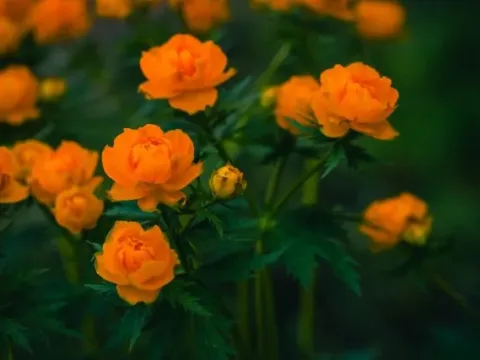
Ledebour's globeflower
Trollius ledebourii
The propagation of Ledebour's globeflower is primarily conducted through seeds, which require cold stratification to break dormancy. Sowing in late autumn directly into the ground is the preferred method, as it exposes the seeds to natural winter temperatures, leading to uniform germination in spring.
What the section contains
Ledebour's globeflower
If opting for spring sowing, artificial stratification in a cold environment for at least two to three months is essential. Seeds should be sown shallowly, barely covering them with a thin layer of soil, as deeper planting often inhibits the development of the fragile seedlings.
As a member of the Ranunculaceae family, Trollius ledebourii is a resilient perennial that takes time to establish. The plant forms a sturdy rootstock, and once it begins to grow, it thrives on the same spot for several years, eventually forming large, highly ornamental clusters.
When selecting a planting site, growers must consider the mature size of the plant, which can reach heights of up to one meter. The soil should be well-prepared and rich in organic matter to support the rapid development of stems during the relatively short growing season.
Patience is required when growing from seeds, as the initial growth phase is slow. The plant spends most of its energy during the first year creating a strong root system, and gardeners should not expect blooms until the plant is sufficiently established, typically by the second year.
Ledebour's globeflower is notoriously moisture-loving, a trait inherited from its natural habitat in marshy meadows and damp woodland borders of Siberia and East Asia. Consistent soil moisture is the primary factor for successful cultivation and sustained flowering throughout the season.
The ideal soil is rich, loamy, and has a neutral to slightly acidic pH. While the plant appreciates moisture, it cannot tolerate stagnant water. Ensuring proper drainage is crucial to prevent root rot, especially during the dormant winter months when the plant is most vulnerable.
This species performs best in locations with full sun to partial shade. In cooler climates, maximum sunlight exposure enhances the vibrancy of the golden-orange blooms, while in warmer regions, some afternoon shade is necessary to protect the foliage from heat stress.
Temperature management is key to keeping the plant vigorous. The globeflower is cold-hardy, but it struggles in extreme heat. Mulching the base of the plant with organic material helps maintain lower soil temperatures and retains moisture, effectively protecting the root zone.
Fertilization should be carried out with care. Applying a balanced fertilizer in early spring supports the flush of new growth, while a phosphorus-rich application after the flowering period helps the plant store energy for the subsequent year's development and winter survival.
Fungal diseases, such as leaf spot and various rots, represent the most significant threat to the globeflower, especially in areas with poor airflow or consistently high humidity. Prevention through proper spacing and good horticultural practices is always more effective than remedial treatment.
If infections occur, affected foliage should be removed and destroyed to prevent the spread of spores. Fungicidal treatments may be necessary in severe cases, but they should be used sparingly and only when cultural practices fail to control the issue within the garden environment.
Pests like aphids and spider mites may target the succulent leaves during dry spells. Regular inspection is recommended, and if populations exceed acceptable levels, insecticidal soaps or systemic pesticides suitable for ornamental perennials can be employed to manage the infestations.
Root nematodes can cause the plant to decline rapidly. Since there are few effective chemical controls for this problem in a garden setting, it is vital to source healthy planting material and practice strict hygiene, including disinfecting garden tools used in affected areas.
Slugs and snails are frequently attracted to the moisture-rich environments preferred by this plant. Utilizing organic barriers like crushed eggshells, gravel, or eco-friendly baits can keep these mollusks away, preserving the integrity of the foliage and overall aesthetic value of the plant.