
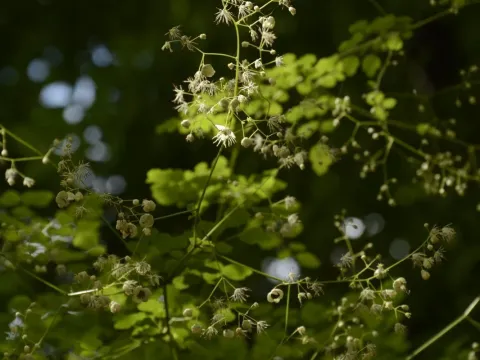
Leafy meadow-rue
Thalictrum foliolosum
Leafy meadow-rue (Thalictrum foliolosum) is a perennial herbaceous plant belonging to the Ranunculaceae family. Native to the Himalayan region, it thrives in cool, moist, and high-altitude environments, which dictates its specific cultivation requirements.
What the section contains
Leafy meadow-rue
The plant prefers fertile, well-draining soils rich in organic matter. A loamy soil composition that retains moisture without becoming waterlogged is ideal for its development. It performs best in partial shade, mimicking its natural forest-edge habitat.
Consistent moisture is critical for the success of this crop. During prolonged dry spells, irrigation must be provided to prevent the leaf tips from browning and to ensure the plant maintains its structural integrity and vitality.
Agricultural management involves regular mulching to keep the roots cool and weed control to reduce competition for nutrients. Light spring fertilization with organic compost supports the vigorous growth of its tall stems and delicate foliage.
The plant is highly valued for its medicinal properties, containing alkaloids used in traditional and modern pharmacology. Its aesthetic appeal also makes it a staple in ornamental gardening for shaded or woodland-themed landscapes.
Leafy meadow-rue is susceptible to various fungal diseases, especially powdery mildew, which can occur if air circulation around the plants is restricted. Proper spacing is essential to mitigate this risk.
Leaf spot diseases can also impact plant health, particularly in seasons with high rainfall. Using copper-based fungicides can help control the spread of these pathogens if detected early in the growing cycle.
Aphids and spider mites are the primary insect pests affecting this species. They feed on the undersides of the leaves, causing curling and yellowing. Regular inspections and the use of neem oil or insecticidal soap are effective controls.
Root rot is a major threat in soils with poor drainage. Once established, this condition is difficult to treat, making preventative soil management and proper site selection the most important factors for crop survival.
General hygiene, such as removing fallen leaves at the end of the season, reduces the overwintering potential for pathogens and pests, ensuring a healthier start for the plant in the following spring.