
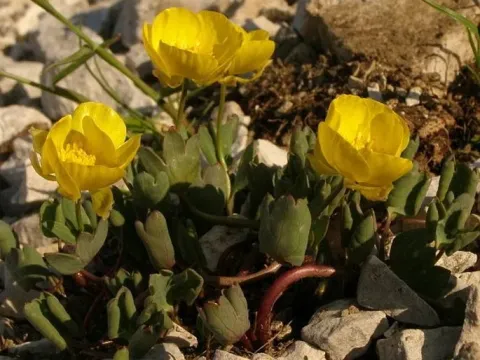
Short-leaved buttercup
Ranunculus brevifolius
The Short-leaved buttercup (Ranunculus brevifolius) is a herbaceous perennial belonging to the Ranunculaceae family. It is a highly specialized plant species, naturally occurring in mountainous regions where it has adapted to extreme environmental conditions.
What the section contains
Short-leaved buttercup
The species originates from alpine meadows and rocky slopes at high altitudes. Its geographic distribution is limited to specific mountainous zones where the growth season is brief, often lasting only a few months during the short summer period.
Cultivation of Ranunculus brevifolius requires strict adherence to soil moisture and aeration standards. The substrate must be well-drained, porous, and lean, mimicking the rocky conditions of its native habitat to prevent root rot and physiological stress.
Climate requirements for this plant focus on cool temperatures and adequate air circulation. High summer temperatures are generally detrimental to the plant, so cultivation in warmer zones requires careful positioning in partially shaded areas or cooler sites within the garden.
Horticultural use is primarily focused on rock gardening and alpine collections. Because of its unique appearance and high sensitivity to cultural conditions, it remains a plant for experienced gardeners rather than for mass landscape production.
The primary threats to Ranunculus brevifolius include fungal infections such as root rot and stem decay. These issues occur primarily when the drainage is insufficient or when the soil remains waterlogged for extended periods after precipitation.
Insect pests such as leaf miners and aphids can cause damage during the vegetative stage. While these pests rarely kill the plant outright, they significantly weaken its vigor and diminish its ornamental value, making the plant more susceptible to secondary infections.
Competition from more aggressive, fast-growing weeds is a major threat in a garden setting. The Short-leaved buttercup is a slow-growing species, and it will quickly succumb if overshadowed or out-competed for nutrients by surrounding vegetation.
Thermal stress caused by sudden heatwaves represents a significant physiological threat. Providing a thick mulch of grit or gravel around the base of the plant helps to maintain a stable soil temperature and protects the root system from overheating.
Disease management should prioritize preventative measures, such as ensuring proper spacing between plants to facilitate airflow. If infestation occurs, targeted applications of horticultural oils or fungicides should be used with caution, as alpine species can be sensitive to chemical treatments.