
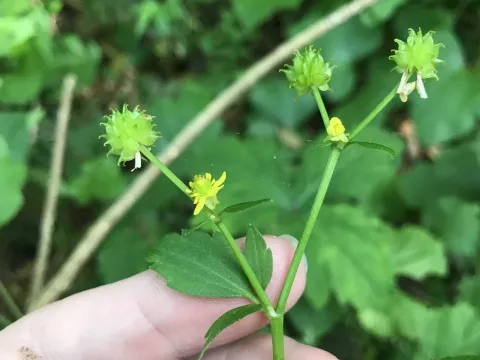
Silerleaf buttercup
Ranunculus silerifolius
Silerleaf buttercup (Ranunculus silerifolius) is a perennial herbaceous plant belonging to the Ranunculaceae family. It is native to Eastern Asia, where it thrives in moist meadows and riverbank habitats.
What the section contains
Silerleaf buttercup
The crop requires soils with high moisture-retention capacity, typically loamy soils rich in organic matter. Optimal development occurs in neutral to slightly acidic pH conditions where the root system can access consistent moisture.
In terms of climatic needs, the plant prefers moderate temperatures and is well-adapted to regions with high humidity. Direct sunlight promotes vigorous growth, although the species can withstand partial shade in its natural environment.
Botanically, it is distinguished by its characteristic leaf structure, which resembles those of the Silphium genus. Its root architecture allows for effective nutrient absorption, supporting steady growth throughout the season.
Agricultural cultivation focuses on maintaining uniform soil hydration and preventing nutrient leaching. Its role in forage production is subject to regional suitability and ecological management practices.
The primary threats to Ranunculus silerifolius involve fungal pathogens, particularly powdery mildew and various types of rust. These diseases are most prevalent in humid conditions with poor air circulation.
Pest pressure often originates from leaf-chewing insects and aphids that exploit the succulent foliage. Infestations should be managed early to prevent significant biomass loss.
Root rot is a critical threat during periods of excessive waterlogging. Ensuring proper soil aeration and drainage is essential to preventing this physiological and pathological complication.
Integrated Pest Management (IPM) strategies are recommended to maintain plant health. This includes selecting resistant cultivars if available and rotating crops to break pest life cycles.
Regular scouting of the field is necessary for the early detection of localized outbreaks. Applying organic fungicidal treatments is often preferred in scenarios where the plant is part of a multi-purpose forage system.