
Slovak pasqueflower
Pulsatilla slavica
Description
Growing requirements
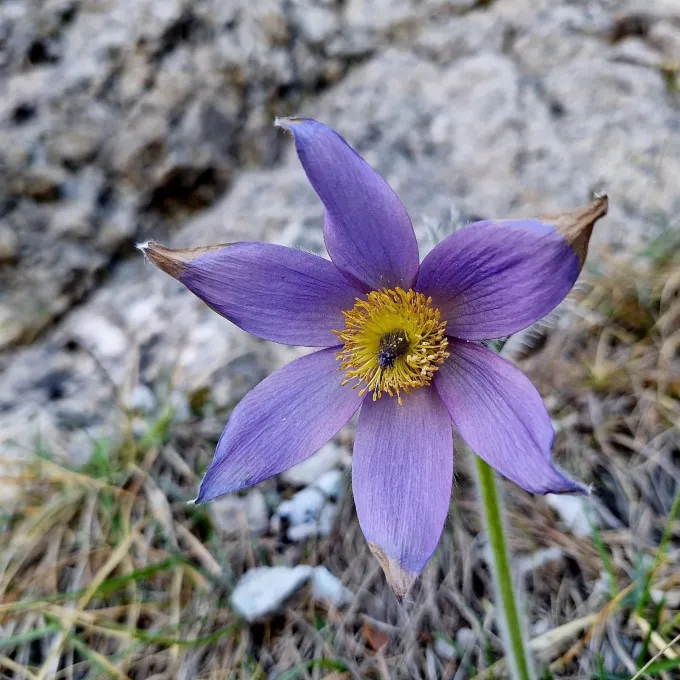
The Slovak pasqueflower (Pulsatilla slavica) is a perennial herbaceous plant belonging to the Ranunculaceae family. Native to the mountainous regions of Central Europe, particularly the Carpathians, it is naturally adapted to limestone outcrops and alpine meadows.
Botanically, it is defined by its deep taproot system and dense, silky hairs covering the leaves and flower stalks, which act as thermal insulation. Its large, bell-shaped flowers typically emerge in early spring, often while the ground is still cold.
For successful cultivation, the species requires well-draining, stony or sandy soil with an alkaline pH. It is essential to avoid moisture-retentive clays, as poor drainage is the primary cause of failure in domestic gardens.
Agricultural management is focused on providing full sun exposure. The plant is extremely drought-tolerant once established but needs consistent moisture during its initial development stage after germination or planting.
Economically, it is valued as an ornamental species for rock gardens and naturalistic landscaping. It serves as a significant early-season nectar source for bees and is highly sought after for alpine-style botanical collections.
Main diseases and pests
Root rot is the most critical threat, primarily caused by fungal pathogens under conditions of waterlogging or high humidity during the dormant season.
Snails and slugs are common pests that feed on the soft, emerging foliage and flower buds, potentially causing significant damage to young plants.
Powdery mildew can affect the foliage in stagnant air conditions, necessitating improved ventilation and appropriate chemical control if symptoms persist.
Monitoring for aphids during the growing season is advised, as they can cause deformation of the developing flower stalks and reduce the plant's aesthetic value.
Proper soil drainage acts as the main prophylactic measure, preventing the majority of soil-borne fungal diseases that typically affect this species.