
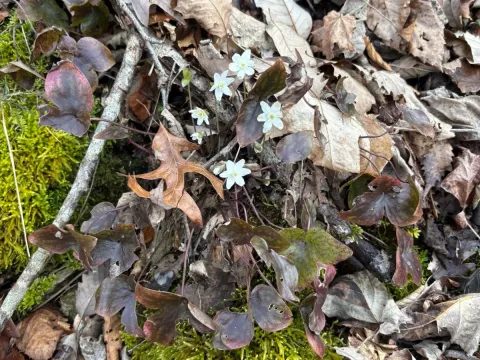
Sharp-lobed hepatica
Hepatica acutiloba
Sharp-lobed hepatica (Hepatica acutiloba) is a spring-blooming perennial member of the Ranunculaceae family. Native to the forests of North America, this plant is well-adapted to environments with rich, organic, and moist woodland soil.
What the section contains
Sharp-lobed hepatica
Botanically, the plant is characterized by its evergreen tripartite leaves with distinctively pointed lobes. Its root system is fibrous and hardy, allowing the plant to remain dormant under snow throughout winter and emerge early in the spring.
For successful cultivation, the plant requires semi-shaded locations that replicate the forest canopy. Intense midday sun is detrimental to its foliage and may cause premature dormancy or leaf scorch during the summer heat.
Soil requirements involve a high content of humus, leaf mold, and a slightly acidic to neutral pH. Adequate drainage is essential, as the plant will not tolerate waterlogged conditions which often lead to root decay.
Maintenance techniques include regular mulching with organic matter to retain moisture and suppress weeds. Because the roots grow near the surface, gardeners should avoid deep digging near the plants to prevent mechanical injury to the rhizomes.
The primary threats include fungal pathogens such as gray mold (Botrytis), which thrive in cool, damp conditions. Ensuring good air circulation and preventing leaf litter accumulation helps in reducing the impact of these fungi.
Slugs and snails are the most common pests, particularly affecting new leaves as they emerge in early spring. Barrier methods, such as crushed eggshells or physical barriers, are often used to protect the vulnerable young foliage.
Root rot, typically caused by excessive irrigation in poorly drained soil, is a critical threat that is difficult to cure once established. Preventive measures include incorporating sand or gravel into the planting hole.
Leaf spot diseases can occur during humid summers, manifesting as dark patches on the foliage. While usually not fatal, these infections should be managed by removing damaged leaves to maintain the plant's aesthetic value.
Environmental stress from drought or direct sun exposure makes the plant susceptible to secondary infections. Maintaining consistent soil moisture and selecting appropriate planting sites are the most effective strategies for long-term health.