
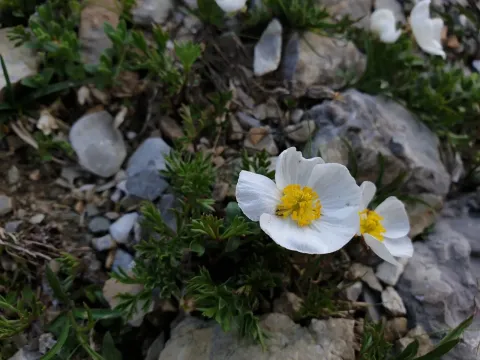
Seguier's buttercup
Ranunculus seguieri
Seguier's buttercup (Ranunculus seguieri) belongs to the Ranunculaceae family and is native to the high-altitude alpine regions of Europe.
What the section contains
Seguier's buttercup
As an alpine species, it thrives in stony, well-draining soils with a significant alkaline content, typically found in limestone mountainous terrain.
The plant requires full sun exposure to mimic its natural habitat and needs a cool, breezy environment to prevent heat-related stress during summer months.
Watering must be strictly controlled, as the roots are highly susceptible to rot if exposed to waterlogged conditions for even a short period.
During winter, the plant requires a dormant phase, ideally covered by a protective layer of snow or dry mulch to survive the sub-zero temperatures.
Root rot is the primary threat to Seguier's buttercup, often caused by poor drainage or excessive humidity in the soil during the growing season.
Powdery mildew can affect the foliage if the plant is grown in areas with poor air circulation or high moisture levels on the leaves.
Spider mites are common pests in dry, warm climates, frequently attacking the plant and causing yellowing or drying of the leaf blades.
Slugs and snails often feed on the tender young tissues of the plant, especially in spring, requiring manual control or the use of protective barriers.
To mitigate these risks, gardeners should prioritize mineral-based substrates and avoid overhead irrigation to keep the plant canopy as dry as possible.