
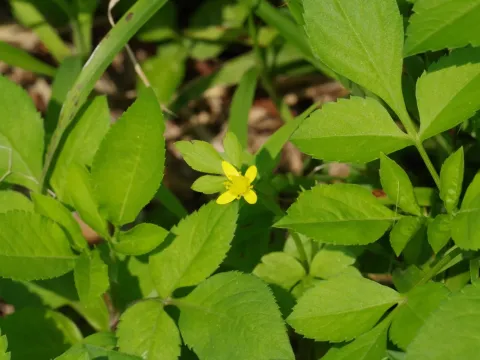
Siebold's buttercup
Ranunculus sieboldii
Sowing Siebold's buttercup requires strict adherence to temperature regimes, as the seeds of this species thrive best under moderately cool conditions.
What the section contains
Siebold's buttercup
Early spring is considered the optimal time for sowing, once the soil temperature reaches approximately 10 to 12 degrees Celsius for uniform germination.
Pre-sowing stratification of seeds in a refrigerator for several weeks is highly recommended to improve overall germination rates and seedling vigor.
Seeds should be planted at a shallow depth of no more than 1 centimeter to ensure adequate light exposure, which is vital for initial plant development.
After the first true leaves emerge, seedlings should be pricked out into individual containers to prevent competition and promote healthy root growth.
Siebold's buttercup belongs to the Ranunculaceae family and prefers well-drained, fertile soils with a neutral or slightly acidic pH level for optimal results.
This crop is highly sensitive to waterlogging, therefore selecting a location with loamy or sandy soil texture is critical for preventing root rot.
The plant is light-loving, though it requires partial shading during peak summer heat to prevent foliage damage and maintain ornamental quality.
Maintaining consistent soil moisture is essential, as the root system of this species does not tolerate complete drying out during the growing season.
Regular application of balanced fertilizers enriched with phosphorus and potassium supports vigorous growth and prolonged flowering periods.
Fungal diseases, including powdery mildew and various types of root rot, pose the most significant threat to the health of Siebold's buttercup.
Preventative treatments with broad-spectrum fungicides are necessary if the weather conditions become excessively humid to avoid rapid pathogen spread.
Pests such as aphids and spider mites can severely impact plant health by feeding on the sap of young shoots and developing flower buds.
Integrated pest management, including the use of biological insecticides, is recommended to control populations without damaging the plant's sensitivity.
Ensuring proper spacing between plants to allow for sufficient air circulation is an effective cultural practice to reduce the incidence of disease.