
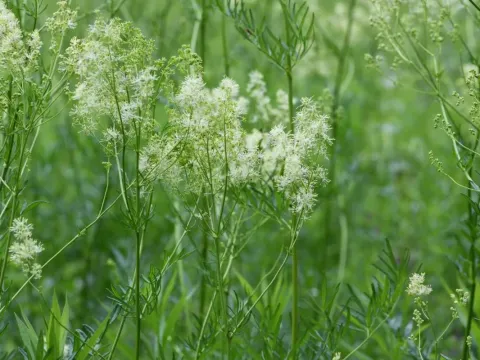
Narrowleaf Meadow-rue
Thalictrum lucidum
Narrowleaf Meadow-rue is a perennial herbaceous plant belonging to the Ranunculaceae family. Sowing is typically carried out in late autumn for winter sowing, as the seeds require a period of natural stratification to ensure uniform germination in the spring.
What the section contains
Narrowleaf Meadow-rue
If spring sowing is preferred, the seeds must undergo artificial cold stratification for 2 to 3 months at near-freezing temperatures. Seeds are sown at a shallow depth of approximately 0.5–1 cm, ensuring sufficient spacing between rows for root development.
Vegetative propagation via root division is also a highly effective method for this crop. The optimal time for dividing the rootstock is during early spring or autumn dormancy, which ensures better survival rates and rapid establishment of new plants.
Seedlings emerge slowly, making weed control in the early stages of growth critical. Regular irrigation is necessary immediately after emergence to support the formation of the initial leaf rosette, which is vital for the plant's long-term health.
The crop is known for its longevity, remaining productive in the same field for up to 7 years. After this period, division and replanting are recommended to prevent overcrowding and maintain the overall vigor and yield of the plantation.
The plant performs best in sunny locations but can tolerate partial shade during the hottest parts of the day. Thalictrum lucidum exhibits excellent frost hardiness, allowing it to be cultivated in temperate climates without the need for winter protection.
Regarding soil, it prefers fertile, humus-rich loams. Adequate drainage is essential, as the species is highly susceptible to root rot if water stagnation occurs, particularly in low-lying areas of the field.
A soil pH ranging from neutral to slightly acidic is ideal for optimal growth. On highly acidic soils, the application of agricultural lime or dolomite is advisable to adjust the pH level and improve nutrient availability.
The crop requires consistent moisture, especially during the peak growing season in late spring and early summer. Prolonged drought can significantly reduce the volume and quality of the vegetative mass, which is critical for medicinal harvesting.
Fertilization regimes should include organic amendments in early spring, supplemented by mineral fertilizers as needed. Nitrogen-rich applications are best utilized during the initial vegetative phase to encourage maximum foliage production.
The yield of green biomass depends heavily on plantation density and soil fertility management. Harvesting is scheduled during the peak flowering phase, when the concentration of biologically active alkaloids is at its highest level.
On average, a well-managed plantation can produce between 5 and 8 tons of dried biomass per hectare. Yield remains relatively stable throughout the productive life of the perennial crop, provided adequate care is maintained.
The primary use of this crop is within the pharmaceutical industry for the extraction of alkaloids. Furthermore, Narrowleaf Meadow-rue is highly prized in horticultural applications due to its elegant foliage and distinct, airy inflorescences.
The plant also serves as an excellent nectar source, making it a valuable addition for beekeepers looking to diversify their forage areas. Combining medicinal value with honey production enhances the overall profitability of the farm.
When harvesting, it is essential to leave a portion of the foliage intact to allow for sufficient photosynthesis to sustain the root system. This practice ensures rapid regrowth and consistent yields in subsequent harvest years.
Thalictrum lucidum is generally robust, but high humidity levels can lead to the development of powdery mildew. This fungal disease appears as a white, powdery coating on the surface of the leaves, hindering photosynthesis.
Prevention involves ensuring proper airflow and adequate spacing between plants to reduce humidity in the microclimate. If an outbreak occurs, copper-based fungicides or authorized biological controls are effective management tools.
Pests such as aphids and leaf-eating insects may occasionally affect the plantation. Monitoring for signs of insect activity allows for targeted treatment with insecticides when necessary, preventing major crop damage.
Root rot is the primary physiological threat when cultivation is attempted in poorly drained soils. Careful site selection and soil amendment are the best preventative measures against this destructive condition.
Implementing an integrated pest management (IPM) strategy minimizes the need for chemical intervention. Regular field scouting and maintaining overall plant health are the cornerstones of effective threat management for this crop.
Harvesting takes place during the flowering stage, typically in June or July. The stalks are cut at a height of 15 cm from the ground, ensuring that the roots remain undisturbed to facilitate future harvests.
Immediately after cutting, the raw material is moved to a well-ventilated area for drying. Exposure to direct sunlight must be avoided to prevent the degradation of light-sensitive chemical components contained within the plant tissues.
Drying is considered complete when the leaves and stems become brittle and can be easily snapped. The final product is then cleaned of debris and stored in breathable paper bags to maintain quality during transit and storage.
Personnel handling the raw material should wear protective equipment, as the plant contains alkaloids that may cause irritation. Safe handling practices are essential during all stages of harvest and initial processing.
Storage of the finished product requires a cool, dry environment protected from direct light. Following these strict drying and storage protocols ensures the long-term pharmacological potency and value of the harvested material.