
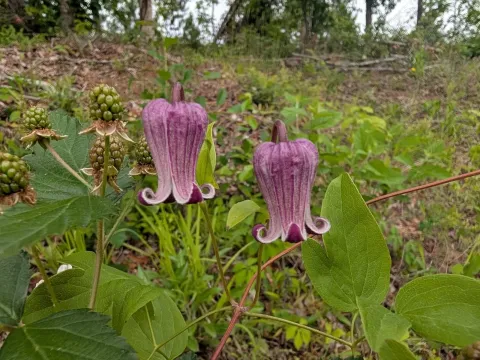
Net-leaf leather flower
Clematis reticulata
The net-leaf leather flower (Clematis reticulata) belongs to the Ranunculaceae family. It is a perennial woody vine native to the southeastern United States, primarily found in woodlands, thickets, and sandy areas where it uses other vegetation for support.
What the section contains
Net-leaf leather flower
Cultivation requires well-drained, fertile soil rich in organic matter. The species thrives in locations where it receives filtered sunlight, although it can tolerate partial shade if the environmental conditions remain sufficiently temperate and humid.
Moisture management is critical for this species; while it prefers consistent soil moisture, it cannot withstand waterlogged conditions. Adding organic mulch around the base of the plant is recommended to keep the root system cool, which mimics the natural forest-floor environment.
The botany of Clematis reticulata is defined by its distinctively veined leaves that give it a reticulated appearance. Its flowers are typically nodding and bell-shaped with leathery sepals, which makes it distinct from common horticultural hybrids that often feature large, flat blooms.
In landscaping, this species is ideal for trellis climbing, fence covering, and wild-style gardens. It provides a subtle, natural beauty that integrates well with other native shrubs, serving as a functional and ornamental component of sustainable garden designs.
The primary concern for Clematis reticulata is fungal wilt (often caused by Phoma clematidina), which blocks water movement within the vines. Infected stems should be pruned and destroyed immediately to prevent the spread of the pathogen.
Pests such as aphids and spider mites can infest the foliage, particularly during dry, hot spells. Regular monitoring and the application of insecticidal soaps or horticultural oils can effectively manage these populations without causing long-term harm to the plant.
Root rot is a common issue resulting from heavy, poorly drained soil. If the soil remains saturated for too long, the root crown will decay, leading to a sudden decline in the overall vigor of the plant during the growing season.
Cultural prevention techniques are essential, including ensuring proper air circulation around the vines. Dense foliage should be thinned periodically to reduce humidity buildup, which is a major contributor to foliar fungal development.
Good garden hygiene, including the removal of dead leaves and debris from the base of the plant in late autumn, is necessary to reduce overwintering sites for both pests and fungal spores that might threaten the plant in the following year.