
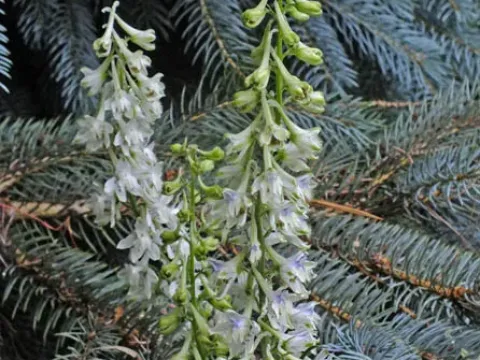
White larkspur
Delphinium albiflorum
Sowing seeds of the white larkspur (Delphinium albiflorum) is most effective when performed in late autumn or early spring using pre-stratified seeds. Seeds require cold treatment to ensure uniform germination rates.
What the section contains
White larkspur
When using a greenhouse method, sow seeds in well-drained potting mix at a depth of 0.5 cm. Maintain the ambient temperature between 12 and 15 degrees Celsius for optimal seedling development.
Seedlings should be transplanted into individual containers once the first set of true leaves appears. Protecting the taproot during this process is crucial for the future establishment of the plant.
Acclimatization of young plants to outdoor conditions should be gradual, spanning over 7 to 10 days. Avoid placing the seedlings in direct scorching sun during the initial hardening-off phase.
Final spacing in the flower bed should be approximately 60 cm apart. This density allows for adequate airflow, which is essential to prevent fungal outbreaks during the peak growing season.
This species thrives in locations with full sun exposure, although partial shade is acceptable in regions with extreme summer heat. Consistent light is vital for the development of sturdy, white spikes.
The soil must be rich in organic matter and possess excellent drainage capabilities. Heavy clay soils require significant amendment with compost or coarse sand to prevent root waterlogging.
Watering requirements are specific: keep the soil consistently moist but never waterlogged. Drip irrigation systems are preferred to keep foliage dry and reduce the risk of secondary infections.
Fertilization with a balanced NPK ratio is recommended during the early growth phase. As buds begin to form, switching to a phosphorus-heavy fertilizer will enhance the intensity of the bloom.
Providing structural support is necessary for this tall-growing plant. Use circular stakes or professional support grids to prevent stems from breaking during heavy rain or strong wind events.
Powdery mildew is a prevalent issue for Delphinium albiflorum. It usually appears as a white fungal dusting on leaves during periods of high humidity and restricted air movement around the plant.
Root rot caused by Phytophthora species is a serious concern in poorly drained environments. Preventive measures include planting on slightly elevated soil mounds and avoiding deep mulch layers.
The larkspur fly (Phytomyza delphiniae) remains a significant pest, as its larvae feed inside the flower buds. Regular monitoring and timely application of systemic insecticides can mitigate this risk.
Slugs and snails target emerging shoots in the spring. Implementing physical barriers like crushed shells or eggshells around the base can deter these common garden pests effectively.
Aphid colonies can develop on young growth, causing stunted development and leaf curling. Early detection allows for biological control methods, such as introducing beneficial insects like ladybugs.