
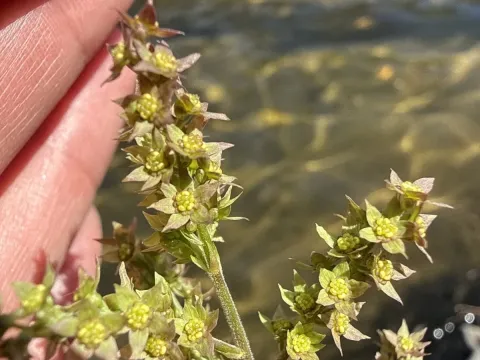
Xanthorhiza
Xanthorhiza
Xanthorhiza simplicissima, commonly known as yellowroot, is typically propagated through division of its rhizomes or via stem cuttings. The best time for planting is early spring, once the soil has warmed sufficiently but still retains essential moisture from the winter season.
What the section contains

Xanthorhiza
For seed propagation, sowing should be done in late autumn, as the seeds require a period of cold stratification to break dormancy. Spring seedlings will emerge once temperatures stabilize and the substrate is kept consistently moist.
Rhizomes should be planted at a depth of approximately 5–8 cm, maintaining a spacing of 30–40 cm between individual plants. The plant exhibits a vigorous spreading habit, naturally filling in gaps to form a dense groundcover over time.
Adequate moisture must be maintained during the initial establishment phase to ensure survival. Drought during the early stages of growth can significantly stunt development and decrease the overall plant population density.
When planning a cultivation site, consider that yellowroot spreads aggressively through its rhizomatous system. Installing root barriers or choosing isolated areas can help in managing its expansion if space is limited.
Native to the moist, shaded woodland areas of North America, Xanthorhiza thrives best in conditions that mimic its natural habitat. It requires acidic to neutral, humus-rich soil that is consistently moist but well-draining.
While the plant is moisture-loving, it is highly susceptible to root rot if grown in heavy, waterlogged clay soils. Providing excellent drainage or planting on slight slopes can prevent the accumulation of excess water around the rhizomes.
Partial shade is ideal for this species. Prolonged exposure to direct, intense sunlight can lead to leaf scorch and dehydration. Mulching around the base of the plant is essential for temperature regulation and soil moisture retention.
The plant is hardy and adapts well to temperate climates. However, in colder regions, young plants may benefit from protective covering during the first winter to shield them from extreme temperature fluctuations.
Regular applications of organic compost promote healthy rhizome growth and dense foliage. While it can survive on minimal fertilizer, balanced nutrition during the spring growing phase will improve the overall yield of the crop.
The primary harvestable product of Xanthorhiza is its rhizome, valued for its high concentration of berberine. The crop reaches economic maturity for harvesting typically 3 to 5 years after the initial planting.
Yield capacity is highly dependent on consistent irrigation and soil quality. In well-maintained, humus-rich beds, the plant forms thick mats that provide a substantial, recurring volume of biomass for harvest.
Drip irrigation systems are recommended for commercial operations to maintain the specific soil moisture levels required for optimal root growth. Weed management is crucial, especially in the first two years of the plantation's life.
Once the plantation is mature, strategic harvesting can be employed, allowing parts of the rhizome system to remain in the ground for ongoing regrowth, thus extending the productivity of the site.
As interest in natural pharmaceutical alternatives increases, the potential for Xanthorhiza as a high-value medicinal crop continues to rise, driving further research into its intensive cultivation methods.
Xanthorhiza is inherently resistant to many common plant diseases, but it is not immune to issues caused by poor horticultural practices. Root rot remains the most significant threat to a healthy stand.
Leaf-eating insects can occasionally cause damage during the active growing season. Regular field monitoring is advised to detect early signs of infestation and to address them using integrated pest management strategies.
Improper soil pH can induce iron chlorosis, manifesting as yellowing leaves while the veins remain green. Soil amendments should be used periodically to maintain the acidic conditions preferred by the species.
Competing weeds present a significant threat to young plants, as yellowroot has a relatively slow establishment rate compared to invasive grass species. Keeping the area clear is vital for plant vigor.
Cultural practices such as maintaining proper plant spacing and ensuring good airflow are the best preventative measures against the spread of mold and fungal pathogens within the planting rows.
The harvest of Xanthorhiza rhizomes is best performed in late autumn, after the plant enters dormancy. As the foliage yellows and dies back, the concentration of active alkaloids in the underground system is at its peak.
Mechanical harvesting equipment, such as specialized root plows, can be used to extract the rhizomes efficiently. Caution must be exercised to avoid damaging the roots, as breaks can lead to quality degradation during storage.
Once harvested, rhizomes should be thoroughly cleaned of soil, washed, and dried in a climate-controlled environment. Low-temperature drying (around 40–50°C) is recommended to preserve the chemical potency of the extract.
Dried product should be stored in cool, dark, and dry conditions to prevent the breakdown of bioactive compounds. Using breathable storage materials ensures long-term stability and quality for pharmaceutical processing.
By following strict harvesting protocols, growers can ensure a high-quality product that meets industry standards, making Xanthorhiza a sustainable and profitable addition to a medicinal plant operation.