
Winter aconite hybrid
Eranthis hybrids
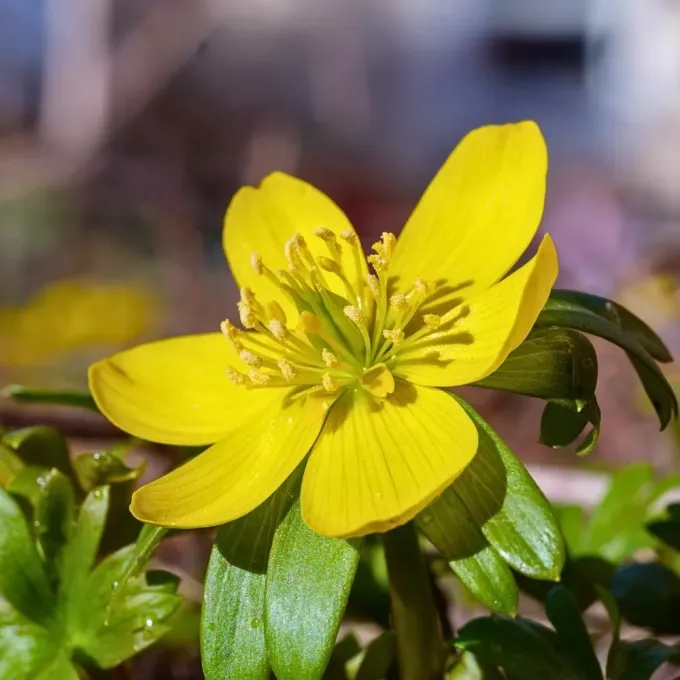
Description
Sowing dates
The planting of Eranthis hybrids should take place in the autumn, specifically between September and October. This timing allows the tubers to establish a robust root system before the onset of soil freezing.
Propagation via seeds is possible but requires immediate sowing after harvesting, as the seeds lose viability quickly. Germination is slow, and plants typically bloom only after three or four years of growth.
Vegetative propagation is the preferred method for gardeners. Splitting the tubers after the foliage has died back in late spring ensures consistent characteristics of the hybrid and faster establishment.
Planting depth should be maintained at around 5 to 7 centimeters. It is crucial to space the tubers adequately to allow for natural clumping and propagation over the coming years.
Before planting, ensure the tubers are firm and free of decay. Soaking them briefly in water or a mild fungicide solution can improve the survival rate of the planting stock.
Growing requirements
Eranthis hybrids belong to the Ranunculaceae family and are well-known early spring ephemerals. They thrive in deciduous woodland environments, requiring partial shade during the spring and full sun before trees leaf out.
The ideal soil is moisture-retentive, humus-rich, and neutral to slightly alkaline in pH. High organic matter content is essential for promoting the vigor of these small bulbous perennials.
Proper moisture management is critical during the active growing season. While the soil should be damp, it must be exceptionally well-drained to prevent tuber rot, a major cause of failure in this species.
Fertilization should be moderate, focusing on organic inputs like well-rotted leaf mold. Over-fertilization, especially with high-nitrogen synthetic products, can compromise the tuber health.
A period of summer dormancy is mandatory for these plants. During this time, the soil should be allowed to dry out significantly, mimicking their natural habitat conditions in Mediterranean climates.
Main diseases and pests
Fungal pathogens, particularly those causing root and tuber rot, represent the most significant threat to Eranthis hybrids. These are almost always exacerbated by poor soil drainage and waterlogging.
Slugs and snails can be highly destructive during the early spring when the tender shoots emerge. Protective barriers or organic bait are necessary to prevent the complete loss of floral displays.
Small rodents can find the tubers to be a tasty treat. Utilizing wire mesh barriers during the initial planting phase is a recommended practice in areas with high mouse or vole populations.
Leaf spots caused by various fungi may appear if humidity remains high for extended periods. Thinning out the plantings can help increase airflow and reduce the incidence of these cosmetic issues.
- Maintain excellent drainage to prevent crown rot.
- Monitor emergence for early detection of pest damage.
- Provide winter mulch only in extremely cold climates to prevent soil heaving.