
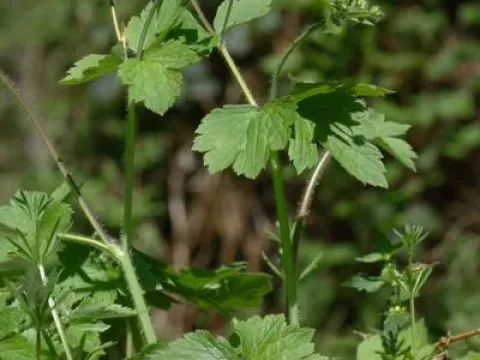
Woolly buttercup
Ranunculus lanuginosus
The woolly buttercup (Ranunculus lanuginosus) is a perennial herbaceous plant belonging to the Ranunculaceae family. It is natively distributed across diverse regions of Europe, where it is primarily associated with damp deciduous forests, clearings, and nutrient-rich meadow soils.
What the section contains
Woolly buttercup
The plant is morphologically distinguished by its erect, hairy stem and palmately lobed leaves. This specific pubescence provides the plant with its common name and serves as a primary feature to differentiate it from other related buttercup species within the genus.
It thrives in moist, well-drained, and fertile soils, demonstrating a high tolerance for shaded environments. Unlike many other field buttercups, this species prefers the shelter of woodland edges or dense hedgerows, making it a typical element of temperate forest ecosystems.
From an agricultural standpoint, it is considered a weed rather than a crop. The presence of protoanemonin in its tissues renders it toxic to livestock, which is why farmers typically aim to reduce its density in pastures to ensure the production of high-quality, safe animal fodder.
Ecological management of this species involves maintaining appropriate soil moisture levels and promoting a dense cover of favorable perennial grasses. Its biological survival strategy relies on both rhizome spread and robust seed production, which enables it to persist in stable, low-disturbance habitats.
The woolly buttercup is susceptible to various fungal pathogens under conditions of excessive humidity, such as powdery mildew, which can cover the foliage during the late summer months. However, the plant's chemical defense mechanisms generally limit the severity of these infections.
Few pests pose a significant threat to the plant, as the majority of insects avoid feeding on it due to its toxic alkaloids. In some isolated cases, leaf miners can cause aesthetic damage to the leaves, but this rarely impacts the plant's overall viability or population density in its natural range.