
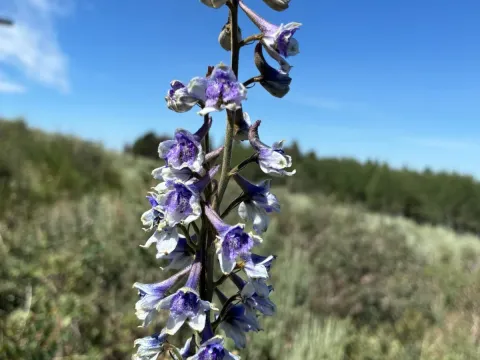
Western larkspur
Delphinium occidentale
Western larkspur (Delphinium occidentale) is a member of the Ranunculaceae family. It is a perennial herbaceous plant naturally distributed across the subalpine meadows and mountain regions of Western North America, often found near streams and moisture-rich terrains.
What the section contains
Western larkspur
The plant features a robust root system and a sturdy, erect stem that can grow between 1.5 to 2 meters tall. Its leaves are palmate-divided, and the flowers are arranged in dense, showy racemes that typically range from deep blue to purple, making it a highly desirable plant for ornamental gardening.
Successful cultivation of Delphinium occidentale requires fertile, well-drained soil with a neutral to slightly acidic pH. The plant thrives in cooler climates and struggles with intense summer heat, making partial shade an ideal condition for its development in warmer areas.
Agricultural care involves consistent but moderate irrigation, as stagnant water is detrimental to the plant's health. Applying organic fertilizers during the active growing season promotes vigorous development, and mulching helps maintain soil moisture levels and protects roots from temperature fluctuations.
In landscaping, Western larkspur is widely valued for its tall, vertical stature, which serves as a striking element in garden borders and group arrangements. Note that all parts of the plant contain alkaloids, which require careful handling and the use of protective gloves.
Powdery mildew is one of the primary fungal threats to Western larkspur, particularly when humidity levels are high and air circulation is poor. Proper spacing during planting is essential to ensure adequate airflow and reduce the risk of disease spread.
Root rot is a major risk, especially in heavy or poorly drained soils. To mitigate this threat, it is crucial to prepare the planting site with effective drainage materials and to ensure that the soil does not become waterlogged throughout the growing season.
Slugs and snails frequently target young sprouts and tender foliage. To control these pests, gardeners often use manual removal, physical barriers, or organic-friendly traps that help preserve the plant's structural integrity.
Aphids can infest the buds and developing racemes, extracting nutrients and causing stunted growth or misshapen flowers. Using insecticidal soaps or specific horticultural treatments helps manage aphid populations without causing excessive damage to the plant.
Leaf miners can create tunnels within the leaves, which detracts from the plant's aesthetic value. Monitoring the foliage throughout the spring and summer allows for the prompt removal of affected leaves, effectively limiting the spread of the infestation and supporting plant vigor.