
Wood anemone
Anemone quinquefolia
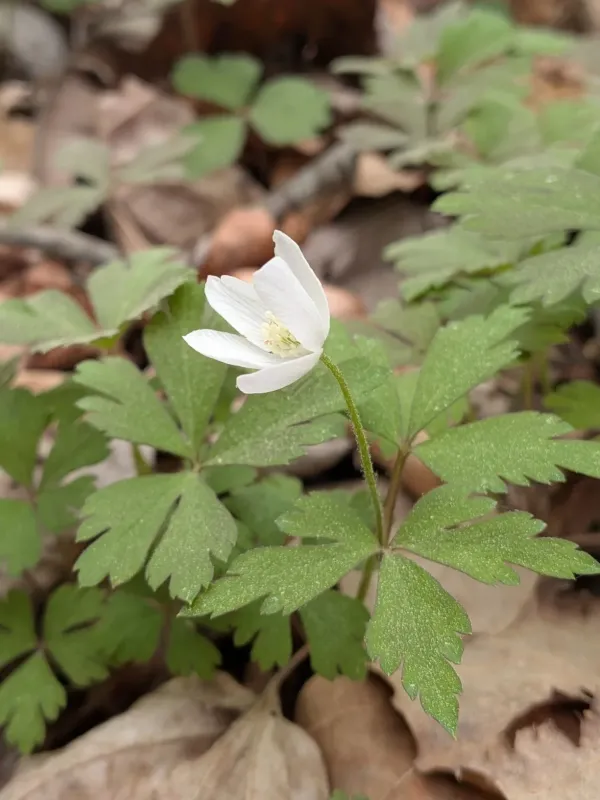
Description
Growing requirements
Wood anemone (Anemone quinquefolia) belongs to the Ranunculaceae family. It is a perennial herbaceous plant native to the moist woodlands of North America, where it thrives in understory conditions.
The plant requires partial to full shade to mimic its natural habitat. Exposure to direct midday sun can stress the plant and reduce its flowering period significantly.
Well-drained soil rich in organic matter is essential for vigorous growth. It prefers slightly acidic to neutral soil conditions that remain consistently moist but not waterlogged.
Temperature requirements are adapted to temperate climates, with the plant showing high cold hardiness. It utilizes the cool spring season for its main vegetative growth and flowering cycle.
Cultural practices should focus on maintaining a cool, humus-rich root environment. Mulching with organic matter helps retain moisture and provides slow-release nutrients throughout the season.
Main diseases and pests
Fungal diseases, including powdery mildew and various leaf spots, represent a major threat, particularly in environments with poor air circulation and high humidity.
Root rot is a common issue when drainage is inadequate. Ensuring that the soil structure remains aerated is critical to prevent the decay of the creeping rhizomes.
Slugs and snails are the primary insect threats. They are attracted to the succulent leaves of the plant and can cause severe damage during moist spring months.
Aphids may infest the flower stalks, leading to stunted growth. Regular inspection and targeted treatment with horticultural soaps are effective methods for population management.
Integrated pest management strategies should emphasize sanitation, such as removing debris and weeds that harbor pests, to minimize the risk of spreading infections.