
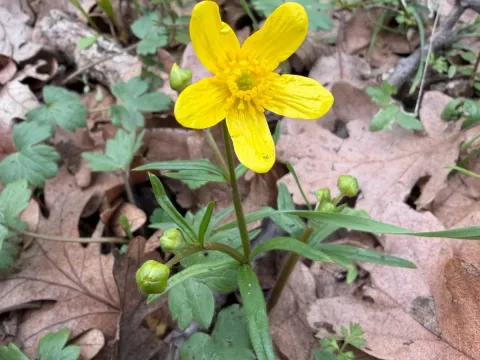
Western buttercup
Ranunculus occidentalis
The Western buttercup, belonging to the Ranunculaceae family, is typically propagated through seeds which require a period of cold stratification to germinate effectively.
What the section contains
Western buttercup
Sowing in a controlled environment is best performed in late autumn, allowing the seeds to experience winter temperatures necessary for breaking seed dormancy.
When sowing in trays, it is recommended to use a lightweight, well-draining soil mix, pressing the seeds gently into the surface without burying them too deeply.
Once seedlings have developed their first true leaves, they can be transplanted into larger containers or directly into the garden in early spring.
Patience is required for this perennial, as it focuses its energy on root development during the first year, typically flowering in the second season of growth.
Ranunculus occidentalis naturally inhabits meadows, open woods, and mountain slopes in western North America, thriving in regions with distinct seasonal changes.
The plant requires well-drained, fertile soil that can hold sufficient moisture without becoming waterlogged, which is critical to avoid root stress.
Ideally, it should be placed in a location receiving full sun or light dappled shade, which mimics its natural habitat on the edges of forests and open fields.
Regular monitoring of soil moisture is essential; however, the species is relatively drought-tolerant once established, owing to its native adaptation to mountain conditions.
It prefers a temperate climate and is generally hardy, capable of surviving harsh winters provided that the crowns are not sitting in freezing standing water.
Powdery mildew is a common fungal threat, often appearing during periods of high humidity and poor air circulation around the foliage of the plant.
Root rot is the most significant danger for the Western buttercup, usually caused by overwatering or poor drainage systems in heavy, compacted soils.
Insect pests such as aphids can occasionally congregate on the flower buds and tender leaves, which can be managed with gentle horticultural soaps or water jets.
The plant contains chemical compounds that are toxic if ingested, serving as a natural defense against grazing mammals in the wild and garden settings.
Maintaining clear spaces between plants and avoiding overhead irrigation are the best cultural practices to prevent the spread of fungal pathogens in the garden.