
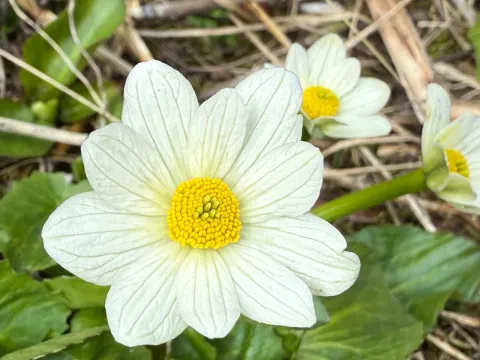
White marsh marigold
Caltha leptosepala
The white marsh marigold (Caltha leptosepala) is a perennial herb belonging to the Ranunculaceae family, naturally found in the alpine and subalpine regions of western North America.
What the section contains
White marsh marigold
This species is highly dependent on high soil moisture levels. It thrives in boggy habitats, along stream banks, and in moist meadows where the soil remains consistently saturated throughout the growing season.
Agronomic requirements include full sun to partial shade, provided the moisture levels are maintained. In warmer garden climates, afternoon shade is critical to prevent heat stress and tissue dehydration.
Soil composition should be rich in organic matter, mimicking the natural mucky substrates of alpine wetlands. The plant adapts well to both acidic and neutral pH levels, provided the moisture is constant.
Cultivation practices involve minimal intervention, focusing primarily on site selection where the water table is shallow, ensuring the roots remain cool and hydrated.
The white marsh marigold is generally robust against many common garden pathogens due to the presence of natural chemical defenses found in the Ranunculaceae family.
Environmental stress, particularly caused by prolonged drought or high temperatures, can lead to leaf senescence and susceptibility to secondary opportunistic fungal infections.
Pests such as slugs and snails represent the primary threat to the plant, especially when foliage is lush and soft during the early spring vegetative growth phase.
Leaf-feeding beetles can occasionally cause aesthetic damage to the leaves, though these infestations are rarely fatal to established, healthy plant colonies.
To ensure plant health, gardeners should monitor for snail activity and maintain a clean growing environment by removing decaying debris that could harbor pests and pathogens.