
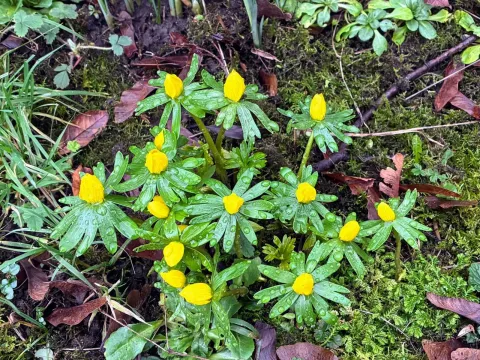
Winter aconite
Eranthis
Winter aconite (Eranthis) is a genus of perennial tuberous plants belonging to the Ranunculaceae family. Native to the temperate regions of Europe and Asia, these plants are known for their ability to bloom early in the spring, often piercing through the snow.
What the section contains

Winter aconite
The plant thrives in deciduous forest environments, which dictates its requirement for dappled shade and humus-rich, well-draining soil. It is perfectly adapted to growing under the canopy of trees that provide shade in the summer and light in early spring.
Soil pH should be neutral to slightly alkaline. The structure must be loose to allow the tubers to develop and to prevent water stagnation, which is the primary cause of rot in this species. Adding organic matter like leaf mold is highly recommended.
Eranthis requires moisture during its active growth period, which spans late winter and early spring. However, once the foliage dies back in late spring, the tubers enter a state of dormancy and prefer dry soil conditions to avoid fungal infections.
As a cold-hardy genus, winter aconite can withstand significant frost. It is an excellent choice for naturalizing in gardens, provided that the microclimate mimics its native woodland habitat regarding temperature and seasonal moisture patterns.
Tubers should be planted in the autumn while the ground is still workable but cooling down. Planting at this time ensures the roots develop before the winter dormancy sets in, which is crucial for early flowering.
The recommended planting depth is approximately 5 to 7 centimeters. If the tubers appear very dry or shriveled, soaking them in lukewarm water for a few hours before planting can help rehydrate them and improve establishment rates.
For a naturalized look, tubers should be planted in clusters rather than in strict rows. Placing them about 10 centimeters apart allows the colony to spread naturally through self-seeding and rhizome division over the subsequent years.
After planting, it is beneficial to mulch the area with a light layer of compost or leaf litter. This helps retain soil moisture during the initial rooting phase and protects the ground from excessive temperature fluctuations.
While propagation by seed is possible, it is a slower process as the resulting plants take several years to reach maturity. Therefore, dividing established clumps during the dormant season is the most efficient method for rapid cultivation.
The most significant threat to Eranthis is root and tuber rot, caused by various soil-borne pathogens. This usually occurs due to poor drainage or excessive nitrogen levels in the soil during the plant's dormant season.
Rodents, particularly voles and mice, are known to feed on the tubers. Protecting the bulbs with wire cages or hardware cloth during planting is often necessary in areas with high rodent populations to ensure the survival of the planting.
Slugs and snails can cause substantial damage to emerging shoots during a cool, damp spring. Regular monitoring and the application of environmentally safe bait or barriers can help protect the succulent new foliage.
Fungal diseases like grey mold may manifest in humid conditions, causing foliage to wither prematurely. Improving air circulation by thinning out overly dense plantings is a proactive management strategy for this issue.
In terms of viral diseases, while relatively uncommon, any plant showing signs of mottling or stunted growth should be removed from the garden to prevent the spread of the virus to healthy clumps of aconite.