
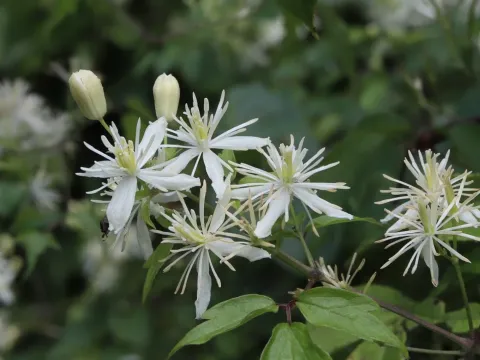
Clematis apiifolia
Clematis apiifolia
Seeds of Clematis apiifolia are best sown in the autumn season, allowing the winter cold to provide the necessary natural stratification for successful germination in spring.
What the section contains
Clematis apiifolia
For spring sowing, seeds require an artificial cold stratification process, lasting approximately 8 to 12 weeks, stored at temperatures between 2 and 5 degrees Celsius.
Use a sterile, well-draining seed starting mix to prevent fungal issues such as damping-off, which often affects young clematis seedlings in excessively damp conditions.
Surface sowing with a light dusting of vermiculite or fine sand is recommended to keep the seeds in place while allowing them to receive sufficient ambient light for growth.
Once seedlings develop their second set of true leaves, they should be carefully transplanted into larger individual pots to establish a robust root system before outdoor planting.
Clematis apiifolia, a member of the Ranunculaceae family, is a vigorous woody climber native to East Asia, known for its distinct celery-like foliage and white flowers.
The plant thrives in locations where its foliage receives direct sunlight, while its root system prefers to be kept cool, shaded, and moist, often achieved by planting low-growing perennials nearby.
Fertile, loamy, and well-draining soil is essential for the healthy growth of this species, as it cannot tolerate waterlogged conditions that lead to root rot.
As a climbing vine, it requires a sturdy trellis, fence, or arbor to support its upward growth, utilizing its leaf petioles to wrap securely around provided structures.
Regular irrigation during the peak of the summer is vital, especially in the first two years after planting, to ensure the plant establishes deep and resilient roots.
Powdery mildew represents a primary fungal threat, appearing as a dusty white residue on leaves during periods of high humidity and poor airflow around the vine.
Aphids can frequently congregate on the tender tips of new growth, causing curling and stunted development, which may require manual removal or the application of insecticidal soap.
Root rot, specifically caused by overwatering, remains a persistent challenge that can be avoided by maintaining proper drainage and avoiding excessive nitrogen fertilization.
To mitigate disease risks, always maintain clean garden practices, such as removing fallen leaves and pruning away dead or crossing branches to improve canopy ventilation.
Monitoring the plant during the early growth stages is crucial, as early detection of pests or nutrient deficiencies allows for targeted and effective garden management.