
Heart-leaf fern
Hemionitis arifolia
Description
Growing requirements
Hemionitis arifolia, commonly known as the heart-leaf fern, belongs to the Pteridaceae family. Native to tropical regions of India and Southeast Asia, this plant thrives in the understory of dense forests where humidity is consistently high and light is filtered.
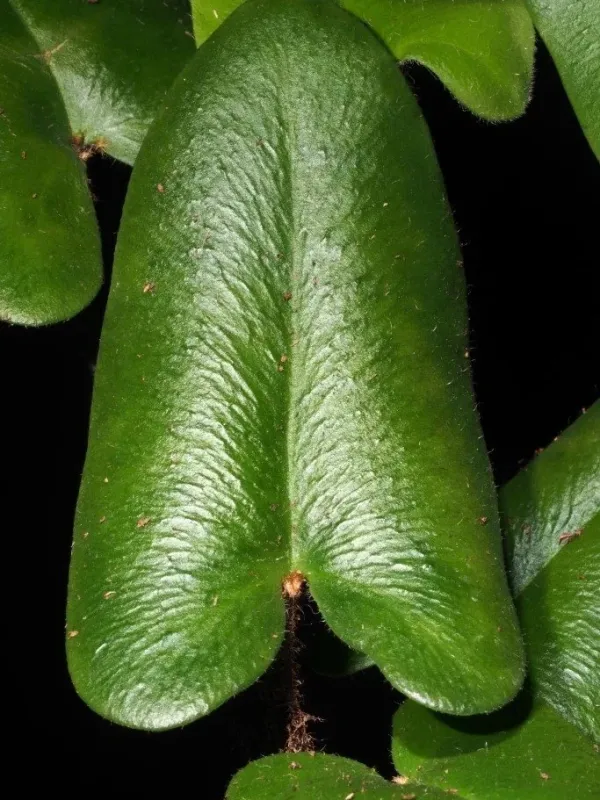
Botanically, it is a small epiphyte characterized by its distinct heart-shaped fronds rising from a central rhizome. The plant is prized for its elegant form, making it a popular choice for terrariums and indoor environments that mimic its tropical origin.
Temperature requirements for this species range from 20 to 25 degrees Celsius. It is highly sensitive to cold drafts, which can cause significant tissue damage. Maintaining a stable environment is essential for the longevity of the plant.
Humidity levels should be maintained between 60% and 80%. If the ambient air is too dry, the edges of the heart-shaped leaves will quickly brown and become brittle, significantly reducing the plant's aesthetic and physiological health.
The substrate must be well-draining, loose, and rich in organic matter. A mixture consisting of peat, orchid bark, perlite, and a small amount of charcoal is ideal for preventing compaction and ensuring proper root oxygenation.
Main diseases and pests
Root rot is the most common health issue caused by poor drainage or excessive irrigation. When the substrate remains waterlogged for extended periods, the delicate rhizomes lose their ability to absorb nutrients, leading to rapid plant decline.
Scale insects are frequent pests that attach themselves to the undersides of the fronds. Their presence is often marked by sticky residue or small brown bumps, which must be manually removed or treated with appropriate pesticides.
Spider mites thrive in environments with low humidity and high temperatures. They damage the foliage by piercing the surface cells, resulting in a stippled, faded appearance on the upper side of the heart-shaped leaves.
Fungal infections, such as leaf spot, can develop if foliage remains wet for too long without adequate airflow. It is crucial to ensure that the environment has sufficient ventilation to allow the surface moisture to evaporate.
To maintain plant vitality, it is recommended to conduct regular checks of the foliage and ensure the soil remains moist but not saturated. Any signs of infestation or disease should be addressed immediately to prevent further spread.