
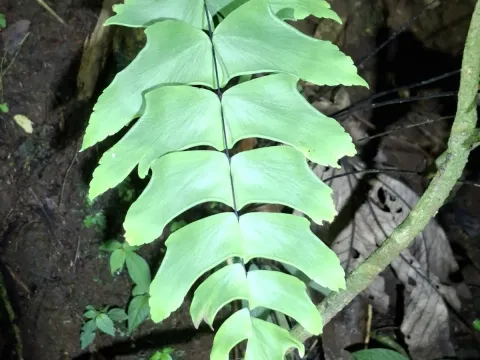
Adiantum macrophyllum
Adiantum macrophyllum
Adiantum macrophyllum, commonly known as the large-leaved maidenhair fern, is a species within the Pteridaceae family. It is native to the tropical regions of Central and South America, thriving in humid forest understories.
What the section contains
Adiantum macrophyllum
The botanical highlight of this plant is its foliage, which emerges with a distinct reddish or pinkish hue, gradually maturing into a deep green. This feature makes it highly valued in specialized horticultural collections and ornamental displays.
Cultural requirements involve maintaining high atmospheric humidity and consistent soil moisture. It is essential to use a potting mix that is rich in organic matter, such as peat moss or leaf mold, mixed with perlite to ensure excellent drainage.
Environmental conditions must mimic the tropical forest floor: stable temperatures between 18°C and 25°C are ideal. Exposure to direct sunlight must be avoided, as it will rapidly desiccate the thin, delicate pinnules of the fern.
Proper agro-techniques include frequent light watering and regular misting. During the growing season, a dilute balanced fertilizer can be applied, though the plant is sensitive to salt accumulation, so thorough periodic leaching of the soil is recommended.
Pests such as mealybugs and scale insects are common issues for Adiantum macrophyllum in indoor environments. These insects hide in the tight junctions of the fronds and require diligent inspection for early control.
Spider mites are a significant threat when ambient humidity drops below recommended levels. These mites quickly cause leaf chlorosis and fine webbing, necessitating immediate quarantine and treatment with soft soap solutions or acaricides.
Root rot remains the most common disease, primarily caused by waterlogged soil. Ensuring that the container has adequate drainage holes and that the plant is never left sitting in stagnant water is vital for long-term survival.
Fungal leaf spots can manifest under conditions of poor air circulation combined with overhead watering. It is best to water the soil directly, avoiding wetting the foliage whenever possible, to maintain the health of the leaves.
Routine hygiene is critical for maintaining this species. Removing any necrotic or yellowing fronds allows for better airflow and prevents the proliferation of pathogens that thrive in decaying plant matter.