
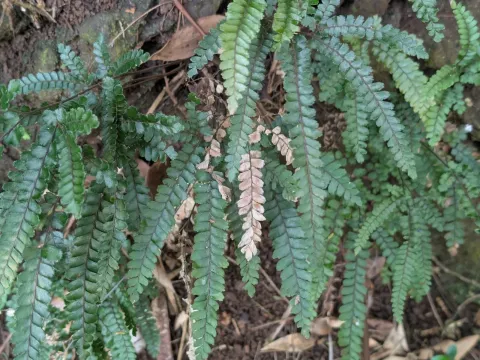
Adiantum hispidulum
Adiantum hispidulum
Adiantum hispidulum, commonly known as the rough maidenhair fern, belongs to the Pteridaceae family. It is a perennial plant native to a wide range of tropical and subtropical habitats in Africa, Australia, and Polynesia, often thriving in shaded forest environments.
What the section contains
Adiantum hispidulum
The plant is distinguished by its fan-shaped, delicate leaflets that feature small, stiff, reddish-brown hairs, which give the foliage a coarse texture. Its fronds emerge with a distinct bronze or pinkish tint before maturing into a deep, glossy green color.
Agricultural requirements for this fern include a high-humidity environment and consistent moisture in the root zone. The soil must be well-draining, nutrient-rich, and slightly acidic, typically composed of a mix of peat moss, leaf mold, and perlite or coarse sand to ensure aeration.
For optimal growth, Adiantum hispidulum requires indirect light and steady temperatures ranging between 18 and 25 degrees Celsius. It is highly sensitive to extreme environmental fluctuations, making it ideal for terrariums, conservatories, or climate-controlled home interiors.
In ornamental horticulture, the species is widely cultivated for its aesthetic appeal in indoor plant collections and botanical gardens. It serves as an excellent groundcover plant in tropical climates, providing soft, layered textures to shady landscape beds and decorative planters.
Common pests include scale insects and spider mites, which are particularly prevalent when the plant is kept in environments with low humidity. Integrated pest management, such as consistent misting and cleaning of foliage, is essential to prevent significant infestations.
Fungal issues, such as leaf spot and root rot, are the primary physiological threats resulting from improper irrigation practices or poor soil drainage. Maintaining clean tools and using pasteurized potting media are standard agricultural practices to mitigate these risks.