
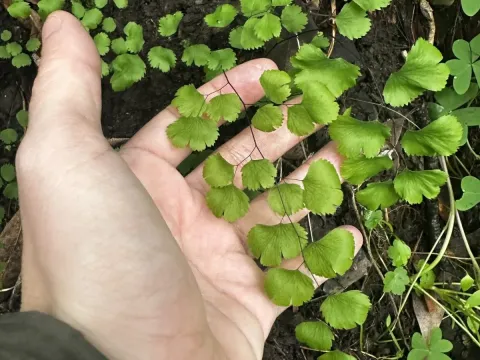
Adiantum jordanii
Adiantum jordanii
Adiantum jordanii, commonly known as the California maidenhair fern, belongs to the Pteridaceae family. This species is native to the western regions of North America, where it thrives in shaded, moist environments such as canyons and north-facing slopes.
What the section contains
Adiantum jordanii
The plant requires filtered light to grow properly; intense direct sunlight can scorch the delicate fronds. A location that provides bright, indirect light is ideal for maintaining the vibrant green color and structural integrity of the plant.
Soil requirements for this crop focus on high organic matter content and excellent drainage. A mix of peat moss, pine bark, and coarse perlite or sand creates the ideal environment for the root system to breathe and prevents waterlogging.
Climate conditions are crucial, with a preference for temperatures between 15°C and 22°C. High humidity levels are essential throughout the growth cycle, making this species particularly suitable for controlled environments like greenhouses or terrariums.
In agricultural and commercial ornamental use, this fern is highly valued for its elegant, cascading foliage. It serves as an excellent candidate for interior plantscaping and specialized nursery production targeting collectors of native flora.
Fungal pathogens such as Rhizoctonia and Pythium are the primary threats to the root system, usually triggered by excessive irrigation and poor substrate drainage.
Insect pests including scale insects and mealybugs can pose a significant threat by sap-sucking, which results in stunted growth and eventual leaf drop if left untreated.
Low humidity levels in indoor environments often invite spider mites, which weave fine webs across the fronds and sap the vitality of the plant.
Integrated pest management strategies are recommended, utilizing neem oil or mild horticultural soaps to treat outbreaks without stressing the fern's sensitive foliage.
Environmental stress, specifically salt buildup from tap water in the soil, can lead to tip necrosis, requiring the use of distilled or rainwater for consistent irrigation.