
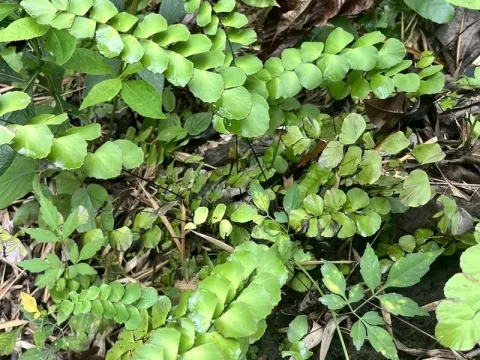
Adiantum grossum
Adiantum grossum
Adiantum grossum is a distinct species within the Pteridaceae family, characterized by its resilient foliage and specific ecological requirements. Originating from tropical regions, this fern thrives in habitats with consistently high humidity and diffused light levels.
What the section contains
Adiantum grossum
The primary cultivation requirement is the maintenance of high ambient humidity, ideally above 65%. In domestic or agricultural settings, it is crucial to avoid low humidity levels which cause the delicate fronds to crisp and turn brown at the edges.
Temperature management is vital for the health of Adiantum grossum. It performs best in a stable environment ranging between 18°C and 24°C. Exposure to sudden cold draughts must be strictly avoided to prevent physiological shock.
The substrate must be well-draining, loose, and slightly acidic. A mix consisting of peat moss, pine bark, and coarse perlite provides the necessary aeration and moisture retention that the root system requires for optimal growth.
Indirect lighting is essential for this plant. While it requires light to fuel photosynthesis, direct sunlight will damage the leaf tissue. Placing the fern in a north or east-facing position usually yields the best results for leaf development.
Common pests that target Adiantum grossum include scale insects and mealybugs. These pests hide on the underside of the fronds, often going unnoticed until the plant shows signs of stress or yellowing.
Fungal issues, particularly root rot, are the most common threats to the plant’s health. This occurs when the soil remains saturated for too long without adequate drainage, leading to the decay of the rhizome structure.
Spider mites are another significant concern, especially during the winter months when indoor heating lowers air humidity. These pests feed on sap, causing stippling patterns on the leaves and overall decline.
Fungal leaf spot diseases can develop if the fronds remain wet for extended periods in low-light, poorly ventilated conditions. Improving airflow around the plant is the best cultural control method to prevent outbreaks.
- Monitor for discoloration or webbing on foliage
- Ensure the pot has adequate drainage holes
- Avoid using heavy or compacted soil mixes
- Maintain consistent but not excessive moisture