
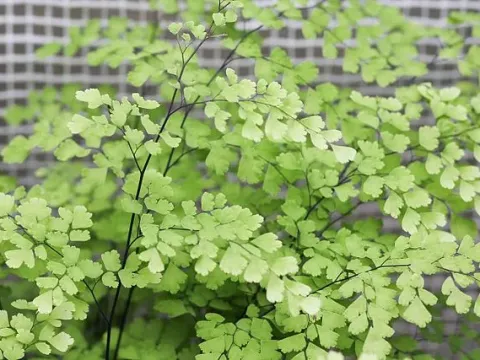
Adiantum fragrantissimum
Adiantum fragrantissimum
Adiantum fragrantissimum is a perennial pteridophyte belonging to the Pteridaceae family. This species is highly valued in ornamental horticulture for its delicate, aromatic fronds and elegant growth habit, requiring specialized greenhouse conditions to thrive.
What the section contains
Adiantum fragrantissimum
The ideal substrate for this fern is a highly porous, humus-rich mixture with a slightly acidic pH. Incorporating sphagnum peat and perlite or coarse sand is essential to maintain root aeration while retaining necessary moisture levels.
Exposure to direct sunlight must be avoided at all costs, as the plant is adapted to the forest understory. Indirect, filtered light is optimal, typically achieved through 50–70% shading cloth in professional production environments.
Maintenance of high ambient humidity, ideally above 65%, is non-negotiable for successful crop production. Automated misting systems are standard tools used to prevent frond desiccation and maintain metabolic activity.
Temperatures should be kept stable, preferably between 18°C and 22°C. Avoiding thermal shock and drafts is crucial, as the species is sensitive to fluctuations that can cause rapid foliage senescence and tissue damage.
The primary pests affecting Adiantum fragrantissimum include mealybugs and spider mites. These pests thrive in environments with low humidity, necessitating careful monitoring of the microclimate throughout the growing cycle.
Root rot caused by Phytophthora or Pythium species is the most common pathology. These infections are almost always linked to over-irrigation or inadequate drainage of the growing media, leading to stagnant conditions.
Fungal leaf spots can occur when foliage remains wet for extended periods without adequate air circulation. Implementing oscillating fans within the greenhouse helps maintain proper airflow and reduces the risk of foliar pathogens.
Management strategies should focus on preventive measures, including rigorous sanitation of pots and tools. Using high-quality, disinfected water sources helps prevent the introduction of water-borne pathogens.
When chemical control is necessary, products must be selected for their safety on sensitive fern foliage. Many standard pesticides can be phytotoxic to Adiantum species, so testing on a small batch is always recommended.