
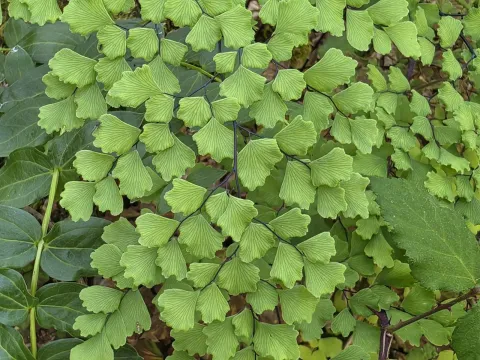
Adiantum chilense
Adiantum chilense
Adiantum chilense belongs to the Pteridaceae family. It is a perennial fern species native to the moist, temperate regions of Chile, where it thrives in shaded areas, rocky crevices, and near streams where the microclimate provides consistent humidity.
What the section contains
Adiantum chilense
The cultural requirements for this fern are quite specific, requiring temperatures between 15 and 22 degrees Celsius. It is highly sensitive to cold drafts and sudden temperature fluctuations, which often lead to irreversible browning of the fronds.
Humidity is the most critical factor for successful growth. The plant requires a relative humidity level of at least 65%. In agricultural or indoor settings, this is typically maintained through automatic misting systems or by placing the pots on pebble trays filled with water.
The growing medium must be well-draining, loose, and slightly acidic. A mix of peat, leaf mold, and horticultural sand is considered standard for ensuring optimal aeration and moisture retention without risking root suffocation.
Lighting should be bright but strictly indirect. Excessive light intensity will cause the foliage to bleach and dry out rapidly. In controlled environments, providing filtered light through specialized shading screens is recommended to preserve the vibrant green color of the fronds.
The primary threats to Adiantum chilense are related to improper soil moisture management, which frequently causes fungal root rot. Symptoms include stunted growth and the collapse of the frond stems at the base.
Scale insects and mealybugs are common pests that attack this species. They hide in the dense foliage, extracting sap and causing the leaves to become distorted and sticky, which can lead to secondary soot mold growth.
Spider mites represent a significant risk, especially during periods of lower humidity. Their feeding habits cause fine stippling on the fronds, leading to a dull appearance and subsequent drop of the leaves.
Management of these pests involves careful monitoring and the application of integrated pest management practices. Using mild insecticidal soaps or horticultural oils is generally safer for the sensitive foliage of Adiantum species.
Regular sanitation, which includes removing dead or decaying fronds, is essential for maintaining the overall health of the plant and preventing the onset of opportunistic pathogens in the growing environment.