
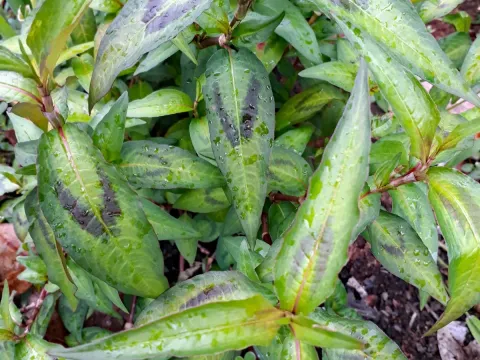
Vietnamese coriander
Persicaria odorata
Vietnamese coriander (Persicaria odorata) is a perennial herbaceous plant belonging to the Polygonaceae family. In non-tropical climates, it is typically grown as an annual crop due to its extreme sensitivity to frost and cold temperatures.
What the section contains
Vietnamese coriander
The most common method of propagation is vegetative cuttings. Stem segments containing nodes will root quickly in water or moist soil when kept at temperatures between 20°C and 25°C.
Seed propagation is rarely utilized commercially because seeds often have low viability and require specific stratification conditions to germinate successfully.
Transplanting seedlings to open ground should only occur after the risk of frost has passed and soil temperatures are consistently high, as the plant suffers in cold soil.
Plants should be spaced 20–30 cm apart to ensure adequate airflow, which is critical for reducing humidity-related diseases in dense foliage.
The plant thrives in consistently moist, nutrient-rich soils. It is naturally adapted to wetlands and riverbanks, requiring a high water table or frequent irrigation to perform well.
Optimal soil conditions include a pH level between 5.5 and 7.0, with a substrate high in organic matter to support rapid growth and leaf expansion.
Persicaria odorata prefers warm conditions and a sunny to partially shaded location. While it needs light, intense midday sun can cause leaf necrosis if moisture levels are not sufficient.
In controlled environments, hydroponic systems are highly effective for this crop, as they allow for precise management of nutrient delivery and consistent moisture levels.
Fertilization should prioritize nitrogen to promote lush leafy growth, which is the primary economic component of this specific agricultural crop.
Root rot represents the primary agricultural threat to this species, usually caused by over-saturation in soils with poor drainage or during prolonged periods of low light and cold.
Spider mites are a persistent pest in greenhouse settings, particularly when humidity is managed improperly, leading to leaf discoloration and reduced harvest quality.
Fungal leaf spot diseases can manifest in greenhouse environments if plant density is too high, leading to reduced air circulation and pockets of stagnant, humid air.
Aphids can target young, tender shoots, causing stunting and potential viral transmission, which requires regular scouting and biological control measures.
To mitigate these risks, growers should maintain adequate spacing, monitor moisture levels strictly, and ensure that old foliage is pruned to prevent disease buildup.
Harvesting is conducted by cutting the upper portions of the stems once they reach sufficient maturity, which typically encourages the plant to branch out and produce more foliage.
The best time for harvesting is early morning, when essential oils are most concentrated, ensuring that the final product has the maximum aromatic impact for culinary use.
Freshly cut stems are highly perishable and require immediate post-harvest handling, including refrigeration or vacuum packaging, to retain their specific cilantro-like aroma.
The crop is highly valued in culinary markets for its distinct flavor profile, which combines notes of lemon, coriander, and mint, making it a high-value specialty herb.
Beyond culinary use, the plant's secondary metabolites are studied for their potential medicinal properties, contributing to its growing demand in modern agricultural markets.