
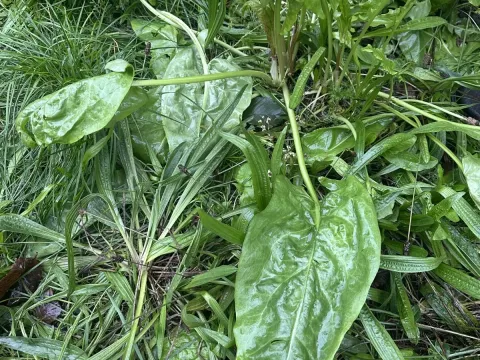
Garden Sorrel
Rumex rugosus
Garden sorrel (Rumex rugosus) is a perennial herbaceous plant belonging to the Polygonaceae family. It is highly valued as a spring crop due to its ability to produce leaves shortly after the snow melts.
What the section contains
Garden Sorrel
Sowing in open fields can be carried out in three distinct periods: early spring as soon as the soil is workable, mid-summer for an autumn harvest, and late autumn for early spring production.
The seeds germinate at low temperatures starting from 2–3 degrees Celsius, but for optimal and uniform emergence, soil temperatures between 15 and 20 degrees Celsius are preferred.
The sowing density is typically about 0.5–0.8 grams per square meter with row spacing of 20–25 centimeters. Seeds should be sown at a shallow depth of approximately 1.5–2 centimeters.
During the first year, establishing a healthy root system is crucial. Adequate soil moisture levels must be maintained to support early development and robust rosette formation.
Sorrel thrives in fertile, well-drained loam or sandy-loam soils. It is notably tolerant of acidic soils, performing well at a pH range of 4.5 to 5.5.
While it prefers sunny locations, cultivation in partial shade is recommended in regions with very hot summers to prevent premature bolting and toughening of the foliage.
The crop is highly sensitive to water availability. Consistent irrigation is required to produce tender, high-quality leaves; otherwise, the plants may become stunted or bitter.
Soil preparation involves incorporating organic matter such as well-rotted compost or manure at a rate of 4–6 kilograms per square meter before planting.
Balanced fertilization with phosphorus and potassium during the growing season helps the plant develop strong roots and enhances winter hardiness in temperate climates.
Yield depends heavily on cultural practices such as regular irrigation and leaf harvesting frequency. On average, a yield of 1.5 to 3 kilograms per square meter can be expected.
The highest yields are typically obtained during the second and third years. After the fourth year, it is common practice to renew the plantation to maintain vigor and quality.
Preventing the plant from flowering is essential, as flower stalks draw significant nutrients away from the leaves and accelerate the decline of the plant’s foliage production.
Proper post-harvest watering encourages rapid recovery and stimulates new leaf growth, significantly boosting the total volume of leaves harvested throughout the season.
Utilizing high-quality cultivars that exhibit resistance to bolting can allow producers to maximize leaf production even under challenging environmental conditions.
Downy mildew is one of the most common diseases affecting sorrel, appearing as a grayish, downy growth on the underside of leaves under high-humidity conditions.
Pest management is often focused on the sorrel leaf beetle, which can cause significant damage to the leaf blade by eating irregular holes and skeletonizing the foliage.
Aphids are another potential threat, as they colonize young leaves, sucking nutrients and causing distortion, which makes the product unacceptable for fresh market sale.
Because sorrel is a leafy green with a short growth cycle, the use of chemical pesticides is discouraged. Instead, biological controls and sanitation are the preferred strategies.
Sanitation practices include crop rotation, thinning to reduce humidity around the base of the plant, and removing dead plant material before the onset of winter.
Harvesting begins when leaves reach approximately 10–12 centimeters in length. They should be cut carefully with a sharp knife about 3–4 centimeters above the soil line.
It is critical to avoid damaging the central growth point, as this ensures the plant will continue to produce new leaves throughout the season.
Multiple harvests can be conducted throughout the season at 2–3 week intervals until the plant begins to produce its main flower stalk.
The final harvest should take place at least one month before the first hard frost to allow the plant to store sufficient reserves for surviving the winter period.
Since sorrel leaves have a high water content and are prone to rapid wilting, they should be cooled immediately after harvesting to preserve their quality and shelf life.