
Golden dock
Rumex persicarioides
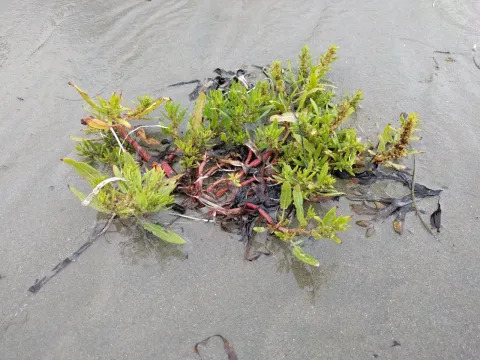
Golden dock (Rumex persicarioides) is an annual herbaceous plant belonging to the Polygonaceae family. It is typically found in moist, nutrient-rich environments, such as riverbanks, wetlands, and damp waste areas, where it can rapidly complete its life cycle.
What the section contains
Golden dock
The plant demonstrates a high preference for damp soil conditions, showing remarkable adaptability to areas with fluctuating water tables. It thrives in soils rich in nitrogen and organic matter, which support the vigorous development of its vegetative parts during the active growing season.
Climate requirements for this species are centered around temperate zones where sufficient humidity and moderate solar radiation are present. While it can withstand periods of temporary inundation, the plant requires adequate aeration of the root zone for optimal nutrient uptake and biomass accumulation.
Botanically, Rumex persicarioides is distinguished by its branched, often spreading stems and its characteristic floral structure. The seeds are produced in large quantities and are well-adapted to dispersal via water, which explains its common presence near water bodies.
In terms of agricultural significance, while not typically cultivated as a commercial crop, its presence is a bio-indicator of high soil moisture and nitrogen levels. Understanding its ecological niche is vital for farmers managing fields in flood-prone areas or near irrigation channels.
Common threats to the health of this plant include fungal pathogens such as rust fungi, which manifest as pustules on leaves. These infections often spread rapidly under conditions of high humidity and poor air circulation, reducing the plant's overall photosynthetic capacity.
Pests that frequently impact this species include leaf-feeding beetles and aphids. These insects can cause significant damage to the foliage, which not only hinders growth but also creates entry points for secondary bacterial and viral infections that further weaken the plant.
Integrated pest management strategies for this species involve a combination of mechanical and cultural controls. Regular cultivation of the soil and hand-pulling before seed maturation are the most effective non-chemical methods to prevent its proliferation in agricultural landscapes.
Chemical control, if necessary, involves the application of selective herbicides targeted at the rosette stage of the plant. It is crucial to monitor field conditions closely to ensure that such applications do not have non-target effects on adjacent desirable crops or native vegetation.
Long-term suppression of this species relies on improving soil drainage and land leveling. By altering the specific environmental conditions that favour the growth of golden dock, producers can naturally decrease its competitive presence without relying heavily on intensive chemical interventions.