
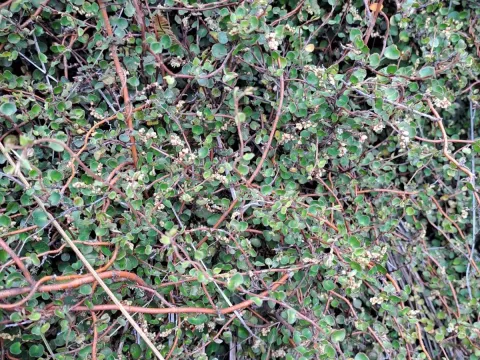
Muehlenbeckia
Muehlenbeckia
Muehlenbeckia is a genus of perennial plants belonging to the Polygonaceae family. These plants are widely appreciated in horticulture for their rapid growth rate, elegant vine-like habit, and dense foliage, making them an excellent choice for ground covers or vertical landscape features.
What the section contains


Muehlenbeckia
Native to the Southern Hemisphere, including New Zealand, Australia, and South America, these plants have adapted to various environments. While they are often cultivated in containers in temperate regions, they can thrive in open ground where winter conditions are sufficiently mild.
The cultural requirements for Muehlenbeckia involve well-draining, nutrient-rich soil with a neutral to slightly acidic pH level. Proper drainage is essential, as the roots are sensitive to waterlogging, which can easily lead to decline in vigor and structural integrity.
Climate preferences include bright, filtered light. While the plants are resilient, they generally perform best when protected from extreme, harsh direct sunlight during the hottest periods of the day, as high intensity can cause dehydration and leaf scorch.
Agricultural management requires consistent moisture levels without over-saturation. During the active growing season, applying balanced, water-soluble fertilizers every two to three weeks will help maintain the deep color and density of the leaves throughout the development cycle.
Common pests that pose a threat to Muehlenbeckia include spider mites, scale insects, and mealybugs. These pests are particularly problematic in environments with low humidity, where they can rapidly multiply and cause significant damage to the plant tissue.
To control these pests, it is vital to perform regular inspections, particularly on the underside of leaves and along the stems. Integrated pest management strategies, including the use of targeted acaricides and insecticides, should be implemented at the first sign of infestation.
Diseases such as root rot are typically associated with poor cultural practices, specifically excessive watering and inadequate substrate drainage. This leads to an anaerobic environment in the soil, which fosters the growth of root-pathogenic fungi.
To mitigate disease risks, maintain adequate spacing between plants to ensure proper air circulation, which prevents the buildup of humidity that can lead to fungal infections. Prompt removal and disposal of any infected foliage are necessary to protect the remaining plant population.
Regular sanitation, such as removing dead or damaged stems, is an effective practice for maintaining plant health. Strong, healthy plants are significantly more capable of resisting opportunistic diseases and pest attacks compared to neglected or stressed specimens.