
Mexican dock
Rumex mexicanus
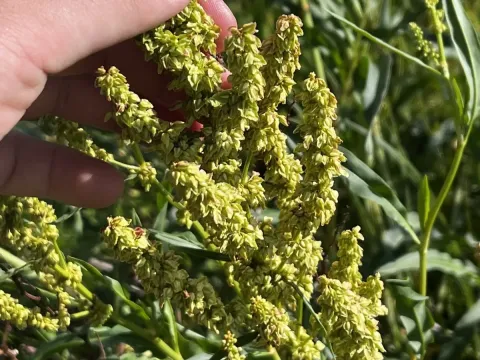
Mexican dock (Rumex mexicanus) is a perennial herbaceous plant belonging to the Polygonaceae family, valued for its adaptability and nutritional profile.
What the section contains
Mexican dock
The seeds are typically sown in early spring, as soon as the soil is workable, which allows for optimal germination using the naturally occurring soil moisture.
For earlier production, growers may choose late autumn sowing, ensuring the seeds remain dormant through winter to sprout rapidly when temperatures rise.
The recommended planting depth is 1 to 2 centimeters, and maintaining a consistent row spacing of 20–25 centimeters facilitates effective mechanical weeding.
Surface compaction after sowing is essential to ensure that seeds maintain close contact with soil moisture, promoting uniform and healthy plant emergence.
This crop thrives best in nutrient-rich, well-drained loam soils that have a high organic matter content and a balanced, near-neutral pH level.
Mexican dock exhibits excellent cold tolerance, making it suitable for temperate regions where it can overwinter successfully without specialized protection.
While the plant prefers full sun exposure, it possesses the ability to tolerate partial shade, though yields may be slightly lower in reduced light conditions.
Adequate water supply is crucial; prolonged drought periods often lead to premature bolting, which negatively impacts the quality of the harvestable leaves.
Site selection should prioritize locations with effective drainage, as waterlogged soil conditions are detrimental to root development and overall plant health.
Downy mildew remains a primary concern, appearing as yellowish spots on leaves and often leading to significant foliage degradation under humid conditions.
Rust infections can occur during periods of high humidity, causing reddish-brown pustules on leaf surfaces that compromise both appearance and marketability.
Pests such as the dock leaf beetle and various aphid species represent significant threats that can cause extensive defoliation if left unmanaged.
Integrated pest management strategies, including the removal of nearby weeds that host pests and improving airflow in dense stands, are recommended.
Chemical control should be avoided or strictly limited to safe bio-insecticides, especially given the rapid turnover of harvest cycles for leafy greens.
Harvesting usually begins when the leaf rosettes reach a commercial size, typically 40 to 50 days after the initial growth phase in the spring.
Leaves are carefully harvested by cutting them a few centimeters above the soil level, taking care to protect the growing point at the center of the rosette.
Multiple cuts can be performed throughout the season, allowing for continuous production of tender, fresh leaves as the plant consistently regenerates.
Proactive removal of emerging flower stalks is necessary to prevent the plant from diverting energy into reproduction, which otherwise makes the leaves fibrous.
Post-harvest care involves supplemental watering and light fertilization to provide the necessary nutrients for quick recovery and subsequent leaf development.