
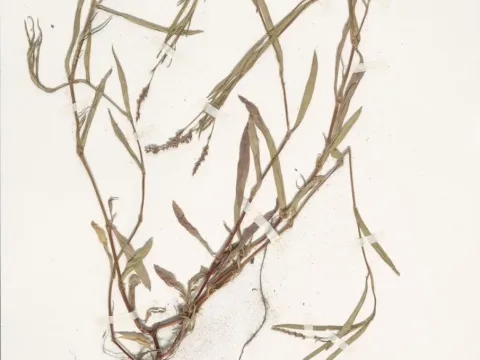
Lesser knotweed
Persicaria erectominor
Lesser knotweed (Persicaria erectominor) is an annual herbaceous plant belonging to the Polygonaceae family. In agricultural settings, seeding is performed in early spring once the soil temperature reaches 8–10 degrees Celsius.
What the section contains
Lesser knotweed
The optimal sowing period is determined by the absence of frost risks. The crop demonstrates excellent germination rates provided the soil has sufficient moisture at the time of sowing.
Seeding rates depend on the intended output: higher densities are used for biomass production. The seeds should be planted at a depth of 1 to 2 centimeters to ensure stability and proper development.
Row seeding is the preferred method, using standard grain drills. Ensuring a firm contact between the seeds and the soil is essential for uniform emergence across the field.
Post-emergence harrowing is often applied to reduce small weeds and improve soil aeration, providing the seedlings with an optimal environment for growth.
Lesser knotweed requires a consistent water supply throughout its growth cycle. It performs best in moist, well-drained soils, ideally those rich in organic matter.
The ideal temperature range for growth is between 18–25 degrees Celsius. The crop does not tolerate extreme heat, which can lead to premature wilting and reduced productivity.
The plant thrives in sunny locations but can tolerate partial shade. Fields with stagnant water should be avoided, as excessive moisture can lead to root zone decay.
Soil pH should ideally be slightly acidic to neutral. Applying potassium and phosphorus fertilizers during soil preparation significantly boosts leaf mass development.
Crop rotation is crucial to prevent the build-up of soil-borne pathogens. Planting lesser knotweed after cereals is generally considered an effective management practice.
The yield of lesser knotweed depends heavily on agricultural practices and the quality of field management. With proper irrigation and fertilization, the plant produces substantial vegetative mass.
Average biomass production rates make this crop a viable option for specialized commercial farming in suitable climatic zones. It is highly valued for its consistent yields under controlled conditions.
Effective weed control is a primary factor influencing final yields. Keeping the field free from competitive flora in the early growth stages is essential for maximizing crop volume.
The plant demonstrates high seed production, which enables producers to maintain their own seed stocks, reducing dependency on external suppliers.
Nitrogen fertilization during the rapid growth phase stimulates significant biomass accumulation, which is critical for biomass-intensive harvest cycles.
The main threats to lesser knotweed include fungal diseases, particularly leaf spots, which typically develop during periods of high humidity and poor ventilation.
Pests such as aphids and leaf-eating insects can cause damage if outbreaks are left unchecked. Regular monitoring of the field is necessary for timely intervention.
Root rot often occurs due to poor drainage or overwatering. Maintaining optimal soil moisture levels and avoiding waterlogged conditions is the best preventive strategy.
The use of insecticides should be minimized and strictly regulated to prevent damage to the ecosystem and ensure the final harvest meets safety standards.
Proper field hygiene and mechanical weed management not only help the crop but also reduce the presence of alternative hosts for common agricultural pests.
The harvest should take place during the peak flowering phase, as this is when the concentration of biologically active compounds in the plant is at its highest.
Mechanical harvesting is performed using mowers to ensure a clean and uniform cut. The harvested biomass must be transported quickly to the processing facility.
Drying must be conducted in well-ventilated areas to prevent fungal growth. Temperatures should be kept within a moderate range to preserve the plant's natural properties.
Cleaning the harvested material to remove impurities and foreign debris is a vital step in ensuring a high-quality product that meets market specifications.
Storage should occur in cool, dry, and dark conditions to prevent oxidation and degradation of the plant material over time.