
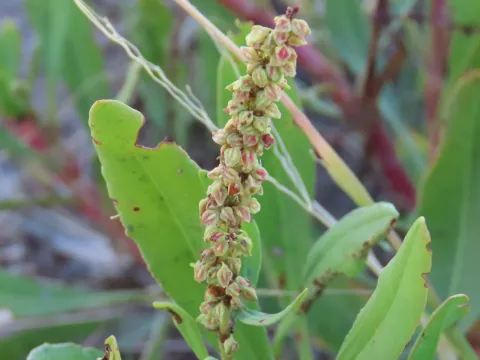
Lanceolate sorrel
Rumex lanceolatus
Lanceolate sorrel, belonging to the Polygonaceae family, is a hardy perennial herbaceous plant. Sowing is best performed in early spring when the soil has thawed.
What the section contains
Lanceolate sorrel
Autumn sowing is also a viable option, ensuring that the seeds germinate early in the following season to provide a harvest as soon as conditions allow.
Seeds should be sown in rows spaced 20 to 30 centimeters apart to provide sufficient space for plants to develop their leaf rosettes effectively.
The optimal sowing depth is approximately 1-2 centimeters, ensuring that seeds are covered sufficiently to maintain moisture while remaining accessible for sprouts.
Rolling the field after sowing improves the soil-seed contact, which significantly boosts germination rates and leads to uniform crop establishment.
This crop thrives in fertile, well-drained soils rich in organic matter, which are essential for maintaining the continuous production of fresh leaves.
Regular irrigation is vital during the growing season, as insufficient moisture levels can cause leaves to become coarse and reduce the commercial yield.
Lanceolate sorrel prefers full sun exposure but exhibits a high tolerance for partial shade, allowing it to adapt to various field conditions and climates.
Soil pH should ideally be neutral or slightly acidic; managing soil chemistry is crucial to prevent nutrient lockout and ensure healthy plant development.
The plant benefits from adequate nitrogen availability, which promotes rapid vegetative growth throughout the active spring and summer seasons.
Yield capacity is highly dependent on effective management, including the frequency of cuttings and the strategic application of fertilizers between harvests.
Under optimal conditions, multiple harvests can be achieved annually, with the first harvest ready approximately 40 to 50 days after initial germination.
Professional cultivation typically yields several tons per hectare, provided that the crop density is maintained and weed competition is minimized.
Productivity remains high for the first few years, but it is standard practice to rotate the crop every 3-4 years to maintain consistent leaf quality.
The weight of individual leaf rosettes varies significantly based on soil fertility and irrigation practices, emphasizing the importance of proper agronomic input.
Common fungal diseases include leaf spot and rust, which are particularly prevalent in regions with high humidity and poor air circulation within rows.
Insect pests, such as aphids and leaf-feeding beetles, pose a recurring threat to foliage quality and require vigilant monitoring throughout the season.
Integrated pest management strategies are recommended, focusing on crop rotation and the removal of infected debris to curb the spread of pathogens.
Chemical control measures must be handled with caution given the short harvest intervals and the potential for residue accumulation on the edible leaves.
Ensuring proper spacing and soil drainage are the most effective preventive measures against the primary diseases that affect this vegetable crop.
Harvesting involves cutting leaves about 3-5 centimeters above the crown, taking great care to preserve the central growth point for subsequent recovery.
It is recommended to harvest during cooler parts of the day, such as early morning, to ensure the produce retains maximum crispness and shelf life.
Immediate post-harvest cooling is required to minimize moisture loss and preserve the high quality expected by consumers in the retail market.
Following a harvest, light soil cultivation and irrigation can help revitalize the root system, promoting the rapid emergence of new, healthy leaves.
Produce should be carefully packaged to prevent bruising, as the tender leaves of Lanceolate sorrel are highly sensitive to mechanical pressure during transit.