
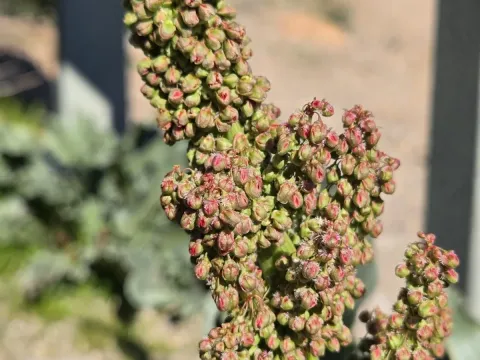
Canaigre
Rumex hymenosepalus
Canaigre, scientifically known as Rumex hymenosepalus, is a perennial plant belonging to the Polygonaceae family. Planting typically occurs in the early spring, ensuring that the seeds are placed in well-prepared soil that has reached an adequate temperature for germination.
What the section contains
Canaigre
Standard agronomic practices suggest sowing in rows to facilitate mechanical maintenance and prevent weed competition during the early growth stages. Given its nature as a root-heavy crop, maintaining proper spacing is essential for the healthy development of the large rhizomes.
Originating from the arid regions of Southwestern North America and Mexico, this crop is exceptionally well-suited to desert environments. It requires full sunlight and thrives in sandy, well-draining soils where waterlogging is effectively avoided.
The plant is highly drought-tolerant, requiring minimal intervention once the root system is established. It is well-adapted to alkaline soils and can tolerate a variety of soil textures as long as aeration is maintained at a high level throughout the year.
Temperature management is less critical due to the plant's natural hardiness, yet extreme frost may temporarily stall growth. For optimal agricultural results, the soil should be kept moderately dry, reflecting the plant's native habitat in scrublands and sandy desert washes.
The primary economic output of Canaigre is the starch-and-tannin-rich rhizome. Under optimal conditions, growers can expect a significant increase in root biomass after the second year, with harvesting often scheduled for the third year to maximize yield efficiency.
While robust, the crop can be susceptible to soil-borne pathogens such as Fusarium species if drainage is compromised. Insect pests, including subterranean larvae that feed on the fleshy roots, require regular field scouting and integrated pest management strategies.
Harvesting is performed by uprooting the matured plants after the foliage has naturally withered. The roots are then thoroughly cleaned, washed, and dried. Processing involves milling or extraction methods, particularly in industries relying on the high tannin content for tanning hides.