
Coccoloba
Coccoloba
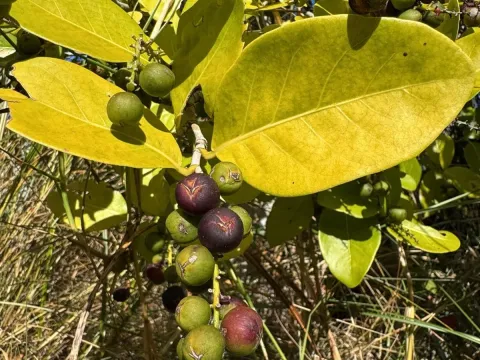
Coccoloba is a genus of flowering plants belonging to the Polygonaceae family. The most widely known species, Coccoloba uvifera, is native to the coastal regions of tropical America and the Caribbean.
What the section contains

Coccoloba
This crop thrives exclusively in tropical climates and is highly sensitive to frost. Successful cultivation requires a frost-free environment throughout the entire growth cycle.
The plant is uniquely adapted to saline conditions, showing high tolerance to salt spray and sandy, nutrient-poor coastal soils where other crops fail to establish.
Exposure to full sunlight is critical for healthy growth. Plants cultivated in shaded areas tend to lose their structural density and significantly reduce their fruiting capacity.
While established plants are drought-tolerant, consistent moisture during the early establishment phase is essential for developing a deep and robust root system.
The primary agricultural output of Coccoloba is its edible fruit, which grows in dense, grape-like clusters. The taste profile can range from sweet to tart depending on ripeness.
The fruits are commercially processed into jellies, jams, and refreshing beverages, making them a significant local commodity in tropical coastal regions.
Beyond food production, the wood of certain Coccoloba species is prized for its high density and durability, serving as a material for furniture and ornamental carving.
Coccoloba plays an important role in coastal landscape management as a windbreak and a stabilizer for sandy soils, protecting inland areas from erosion.
Annual yield is highly dependent on environmental variables and tree age. Proper thinning of the canopy and adequate sunlight ensure sustained high-quality fruit production.
Coccoloba is generally considered a low-maintenance plant with strong natural defenses, though it is not entirely immune to agricultural pests.
Scale insects and mealybugs are the most common pests, primarily targeting the sap of young foliage and stems, which can lead to localized stunted growth.
Fungal leaf spot diseases may appear in environments with poor air circulation or consistently high humidity, affecting the aesthetic and photosynthetic surface of the leaves.
Root rot remains the most significant threat to plant longevity, usually caused by poor drainage and waterlogged soil conditions in cultivated plots.
Effective management includes maintaining proper distance between plants for air circulation, monitoring for pest infestations, and ensuring that irrigation systems do not over-saturate the soil.