
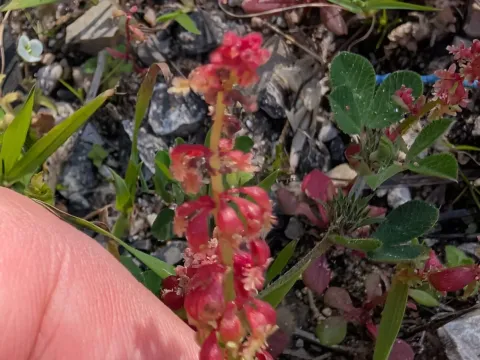
Bull-headed dock
Rumex bucephalophorus
Rumex bucephalophorus is an annual herbaceous plant belonging to the Polygonaceae family. In agronomic contexts, it is primarily recognized for its rapid colonization of fallow fields and disturbed agricultural lands rather than as a commercial crop.
What the section contains
Bull-headed dock
Seed germination typically initiates during the spring months when soil temperatures reach favorable levels. In warmer climatic zones, autumn germination is also common, allowing the plant to develop a strong basal rosette before the onset of winter.
The plant exhibits high ecological plasticity, enabling it to adapt to various field conditions. Its life cycle is relatively short, which allows it to successfully reproduce and contribute to the soil seed bank before standard agricultural harvest times.
Seed dispersal is highly efficient, often leading to dense patches within a field. This necessitates careful planning of sowing patterns for other crops to prevent competition from this persistent plant.
Growth efficiency is tied to soil temperature and available nitrogen, with the plant showing the most vigorous development during periods of moderate climate conditions.
This species thrives in light, well-drained soils, particularly sandy or loamy textures. It shows remarkable tolerance to soil salinity, making it a frequent inhabitant of coastal environments and riverine deltas.
While it has moderate moisture requirements, the plant can withstand short dry spells due to its efficient root system. However, continuous adequate moisture promotes a much higher yield of vegetative biomass.
Full sun exposure is crucial for the optimal development of this species. It is highly sensitive to shading and will show stunted growth if suppressed by taller agricultural crop canopy or dense weeds.
The plant is highly adaptable to a wide range of soil pH levels, spanning from acidic to alkaline conditions. This flexibility contributes to its wide distribution across diverse agricultural landscapes.
Field management should focus on soil preparation techniques that prevent deep-seated germination, such as proper tillage methods and maintenance of optimal crop spacing to ensure sufficient light reach.
Rumex bucephalophorus can act as an alternative host for several rust fungi and mosaic viruses that potentially threaten main agricultural crops. Regular inspection is recommended to detect early signs of pathogen spread.
Pests, including various aphids and leaf-feeding beetles, are common on this dock species. These insects can cause significant damage to the leaves, which may weaken the plant but also facilitate the entry of secondary pathogens.
Root system damage from soil-borne nematodes can occur, particularly in fields with poor crop rotation practices. This damage typically results in a significant reduction of the plant's overall growth potential.
Controlling the spread of this plant involves the removal of individuals before the flowering stage to prevent seed maturation. Mechanical destruction is effective if done consistently throughout the season.
Chemical control programs involving pre-emergent or post-emergent herbicides are standard for fields where this plant interferes with the productivity of the main commercial crop.