
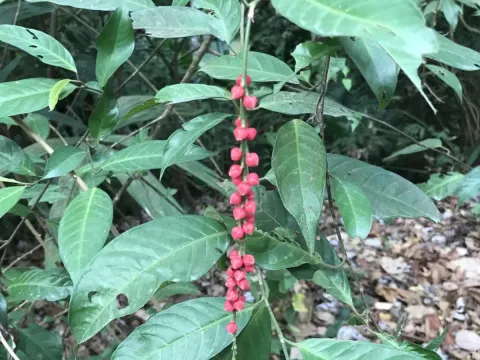
Coccoloba acuminata
Coccoloba acuminata
Coccoloba acuminata is a member of the Polygonaceae family, typically manifesting as a shrub or a small tree native to the tropical regions of Central and South America. It is well-adapted to the dense, humid environments characteristic of its natural habitat.
What the section contains
Coccoloba acuminata
Botanically, the plant is recognized by its acuminate leaves and elongated inflorescences. These structures develop into small, fleshy fruits that are valued in local agroforestry systems. The plant exhibits vigorous vegetative growth when provided with adequate space and light.
Climatic requirements are strict, necessitating a tropical climate with consistent temperatures and high relative humidity. It cannot survive in temperate zones where frost occurs, making it suitable only for specific latitudes where environmental conditions mimic the Amazonian climate.
Soil management plays a vital role in cultivation success. The species prefers well-drained, acidic to neutral soils rich in organic matter. While it thrives in moist conditions, waterlogged soil must be avoided to prevent root diseases and ensure healthy development.
In terms of хозяйственное (economic) use, the plant is appreciated for both its edible berries and its ornamental value. Farmers in tropical regions incorporate it into polyculture systems, benefiting from both the fruit yield and the ecological benefits the plant provides to local biodiversity.