
Reference · Crops
Calligonum
Calligonum L.
Sowing Calligonum is primarily performed using seeds or by planting seedlings raised in nurseries. The optimal time for planting is late autumn or early spring when soil moisture levels are maintained by seasonal precipitation.
2
items
What the section contains


Marketplace
Products in this section · 1
Calligonum
The seeds of Calligonum possess specific wing-like appendages that facilitate wind dispersal. In artificial cultivation, seeds are sown at a depth of 5 to 7 centimeters depending on the soil texture.
To improve germination rates under agricultural conditions, practitioners often use seed stratification or growth stimulants. Ensuring direct contact between the seed and the moist sand layer is critical for successful emergence.
While natural reproduction occurs through self-seeding, commercial forestation projects typically utilize row or cluster planting methods to establish protective barriers.
After planting, it is common to fence off the area or restrict livestock grazing to prevent damage to young seedlings before they have fully established their root systems.
Calligonum belongs to the Polygonaceae family and is a typical xerophyte, specifically adapted to survive extreme aridity. It thrives in shifting sands where other vegetation would perish from water scarcity.
This crop is highly light-demanding and does not tolerate shading, which dictates that it must be cultivated in open, wind-exposed areas of deserts and semi-deserts.
The plant features a profound root system capable of penetrating several meters into the ground to reach deep aquifers. It is highly resistant to the extreme diurnal temperature fluctuations typical of arid climates.
Soils for Calligonum must have high permeability. It prefers light, sandy substrates and cannot tolerate waterlogging or high levels of heavy-type salinity, commonly found in salt flats.
The species is characterized by a unique ability to adapt to sand burial: when branches are covered by shifting dunes, the plant develops adventitious roots, making it an essential tool for erosion control.
The yield of Calligonum in agricultural terms is evaluated based on biomass volume and forage quality. In desert regions, it serves as a valuable grazing plant for camels and sheep.
During the flowering and fruiting stages, the shrub produces a significant quantity of nutlets, which act as a vital food source for both wild and domestic animals during winter and spring.
Agricultural use also includes harvesting browse fodder, which is noted for its high nutritional value. The yield of green biomass depends directly on annual precipitation levels and the age of the plantation.
In plantation management, phytomelioration experts aim to achieve a planting density that provides maximum sand stabilization without exhausting the limited soil moisture reserves.
The consistency of yield is ensured by the plant's biological longevity, as it can remain productive for decades under proper management and protection from overgrazing.
The primary threat to Calligonum is uncontrolled intensive grazing, which crushes young plants and prevents them from anchoring firmly in the sand.
Pests such as wood-boring insects and certain phytophagous species can damage the bark and young shoots, weakening the plant, although mass outbreaks are extremely rare in natural habitats.
Fungal diseases are uncommon and usually associated with uncharacteristically wet years, which do not align with the plant's natural range, occasionally leading to collar rot.
Human activities remain the greatest threat: the harvesting of the shrub for fuel in desert regions leads to pasture degradation and the reactivation of sand dunes, which eventually bury surrounding agricultural land.
While weeds are not significant competitors in desert conditions, invasive species can occasionally compete for limited moisture resources in areas bordering oases.
Harvesting Calligonum for forage involves a gentle pruning of branches during the plant's dormant season to ensure the shrub does not perish from dehydration or shock.
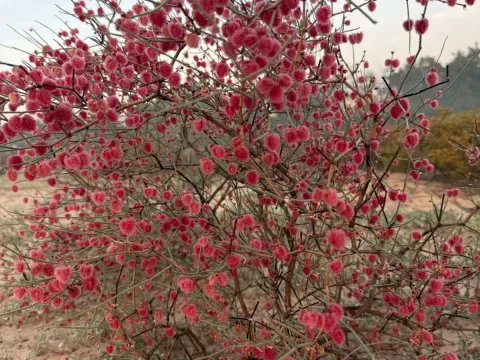
Seed collection for land reclamation projects is performed manually at the peak of maturity, when the fruits attain their characteristic color and detach easily with a gentle shake.
The collection process requires extreme care, as the shoots of Calligonum are quite brittle and can easily break, leading to damage to the plant's structural integrity.
After collection, seeds must be cleaned of impurities such as sand and bark fragments, dried thoroughly, and stored in a cool, dry environment until the next sowing season.
For industrial use as fuel, harvesting is conducted in strict compliance with ecological quotas to maintain the population density necessary for sand stabilization.