
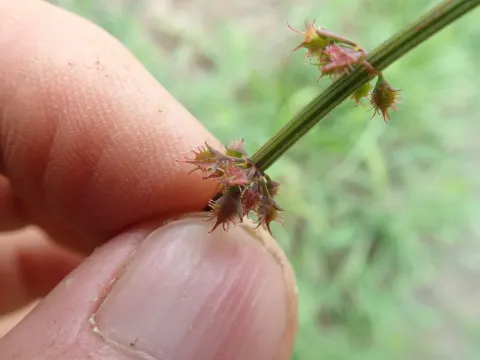
Brown's dock
Rumex brownii
Brown's dock (Rumex brownii) is a perennial herbaceous plant belonging to the Polygonaceae family. For optimal establishment, seeds should be sown in early spring when the soil temperature rises, or in late summer to allow the root system to develop before winter.
What the section contains
Brown's dock
The seeds require a well-prepared seedbed with fine soil structure. A sowing depth of 1–2 centimeters is recommended to ensure the seeds have sufficient moisture contact while still receiving enough warmth to trigger germination.
When sowing in rows, it is crucial to maintain a distance of 30–45 centimeters between them. This spacing is necessary to facilitate subsequent weeding, aeration, and potential mechanical harvesting operations throughout the growing season.
Soil moisture should be carefully monitored during the first few weeks after sowing. If the topsoil dries out too quickly, irrigation is needed to support the delicate seedlings until they develop a more robust root system.
Once the seedlings reach a height of 5–10 centimeters, they should be thinned out to ensure each plant has sufficient space to grow. This practice reduces competition for nutrients and ensures a uniform crop development across the field.
Rumex brownii thrives in diverse environmental conditions but prefers fertile, well-drained soils. Loamy soils with a neutral pH provide the best balance of nutrients and water retention required for vigorous leaf production.
The plant demonstrates a strong preference for sunny locations. While it can tolerate partial shade, maximum biomass production is typically achieved under full sun exposure, which also helps in keeping the foliage dry and reducing disease pressure.
Consistent soil moisture is key to success, especially during the peak growth months of spring and summer. While the plant can withstand short periods of drought, regular irrigation is essential for maintaining the quality and succulence of the leaves.
Nutrient management is fundamental for high productivity. Incorporating organic matter, such as compost, into the soil prior to planting provides a slow-release source of nutrients that supports consistent leaf growth over several years.
Regular cultivation of the soil surface between rows helps prevent soil compaction and suppresses weed growth. A clean, weed-free environment is vital, as weeds can significantly reduce the potential yield and quality of the dock leaves.
The primary threats to Brown's dock include fungal pathogens such as leaf spot and downy mildew. These diseases are most prevalent in areas with high humidity, poor air circulation, and dense foliage, which create a perfect environment for fungal growth.
Insect pests, including dock beetles and aphids, are known to feed on the foliage. Their feeding activity causes aesthetic damage and can reduce the photosynthetic capacity of the plant if infestations are not managed early.
Integrated pest management (IPM) is the best strategy for maintaining healthy crops. This involves monitoring the fields, utilizing beneficial insects, and ensuring the spacing between plants is adequate to provide sufficient airflow.
Cultural control methods, such as removing infected leaves and practicing proper field sanitation, are highly effective at preventing the spread of diseases. It is also recommended to avoid overhead irrigation late in the day to minimize leaf wetness.
If chemical intervention becomes necessary, it is essential to use registered products at the correct dosage. Always respect the pre-harvest interval to ensure the produce remains safe for consumption or intended use.
Harvesting usually begins when the leaves reach a mature size but are still tender. The harvest is typically carried out by cutting the leaves at the base of the plant, which encourages new regrowth from the crown.
For fresh consumption, leaves should be gathered in the early morning when they are most turgid. This helps in maintaining quality during storage and transport. Depending on the climate, multiple cuts can be made per season.
After each cut, it is beneficial to provide the plants with a light application of fertilizer and a deep watering. This helps the plant recover quickly and promotes the production of a high-quality second or third flush of leaves.
Mechanical harvesting equipment should be set to a height that does not damage the crown of the plant. Proper cutting height is crucial for the longevity of the stand, as excessive damage can weaken the plant and reduce its lifespan.
Post-harvest handling involves keeping the produce cool and away from direct sunlight. Quick cooling helps retain the freshness and crisp texture of the leaves, ensuring the product reaches the end user in excellent condition.