
Seaside dock
Rumex maritimus L.
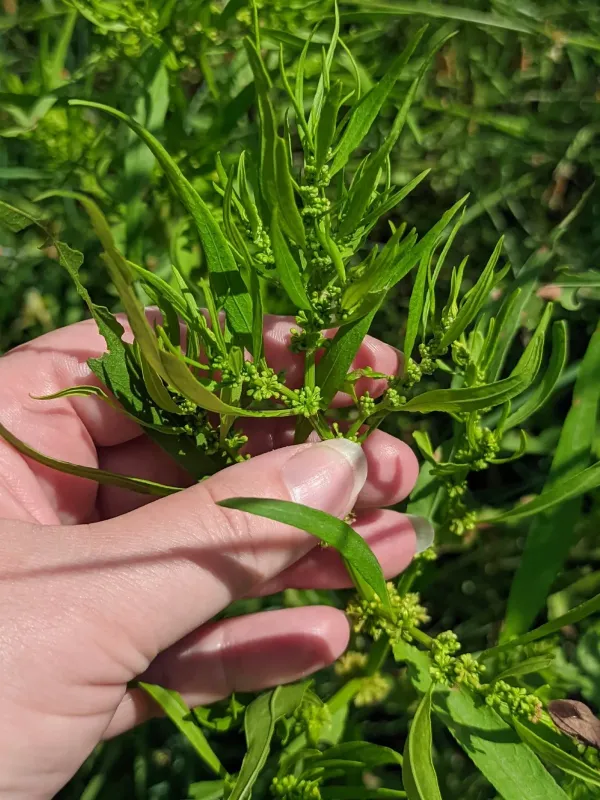
Description
Sowing dates
Seaside dock (Rumex maritimus L.) is an annual or biennial herbaceous plant belonging to the Polygonaceae family. In the wild, seeds mature in late summer and autumn, shedding and undergoing a dormancy period until the following spring.
Under natural conditions, seed germination occurs in spring as the top layer of soil warms up. Stable moisture conditions are required for successful establishment, which is typical for water body banks.
If considered as a component of meadow vegetation, natural regeneration occurs through self-seeding. Cultivation on an industrial scale is limited by the species' specific ecological requirements.
The seeds have a high germination rate but require contact with a moist substrate. In the agronomic cycle, it is important to note that the plant prefers areas with high humus concentration.
Intensive development of the root system begins immediately after the first true leaves appear. The plant quickly forms a rosette, transitioning into the active vegetative growth phase.
Growing requirements
This plant is a hygrophyte, meaning it prefers areas with excessive moisture. It is most often found on damp meadows, the banks of saline lakes, and rivers.
Seaside dock exhibits significant salt tolerance (halophyte), which allows it to grow in saline soils where other dock species are stunted.
The crop is not very demanding regarding lighting, but it develops better in open, well-warmed areas. Excessive shading reduces the rate of green mass accumulation.
The soil cover should be rich in organic matter. The best growth rates are observed on silty or sandy-silty deposits in floodplains.
The species is adapted to moderate climatic conditions and tolerates spring floods and temporary submersion of the root zone well.
Main diseases and pests
The main pests are leaf beetles and weevils, which can damage the leaf blade during the plant's active growing season.
Among fungal diseases, leaf rust is the most common. High air humidity and dense planting contribute to the development of this disease.
Late blight and downy mildew can affect the seaside dock if the soil moisture balance is disrupted and water stagnates during sharp temperature fluctuations.
Caterpillars of certain butterfly species can skeletonize the leaves, which significantly reduces the plant's forage value and slows its development.
Disease prevention consists of adhering to planting density norms and monitoring the drainage levels in the growing areas.
Harvesting
Agricultural use of the seaside dock is limited, as it more often acts as a wild forage component of coastal pastures.
If green mass harvesting is necessary, mowing is conducted before the active flowering phase, as fiber content increases sharply after the flower stalks emerge.
Dock leaves contain oxalic acid, so moderation in the diet is necessary when using it as livestock feed.
Seed material is collected in the phase of full maturity when the perianths acquire their characteristic golden-yellow or brown hue.
Post-harvest seed processing includes cleaning from impurities and drying in well-ventilated rooms to prevent damage by mold fungi.