
Clustered dock
Rumex conglomeratus Murray
Description
Growing requirements
Clustered dock (Rumex conglomeratus) belongs to the Polygonaceae family. It is a perennial herbaceous plant often found in agricultural landscapes, riverbanks, and wet meadows, known for its adaptability to moist environments.
The plant thrives in rich, heavy, and wet soils. It is frequently observed in low-lying areas where water tables are high, indicating a preference for sites that other sensitive agricultural crops might find too waterlogged for survival.
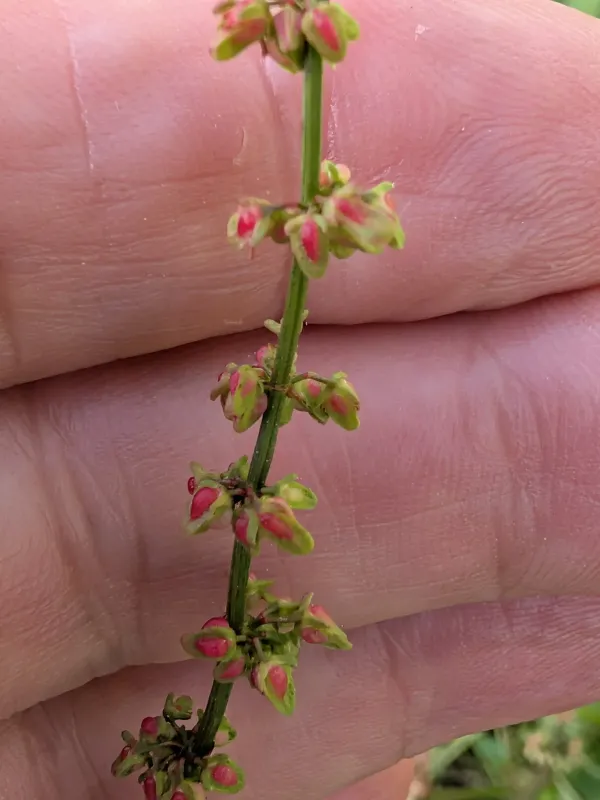
Botanically, this species is distinguished by its dense, clustered inflorescences, from which it derives its common name. The leaves are typically oblong or lanceolate, providing a steady supply of green biomass throughout the growing season.
Clustered dock exhibits strong competitive abilities in pasture settings. Its deep taproot allows it to tap into moisture and nutrients deep within the soil profile, making it a persistent component of the vegetation even under grazing pressure.
Regarding climate requirements, the plant shows great resilience. It is hardy and capable of surviving varying temperature regimes, though it remains most productive in humid temperate zones where rainfall is abundant throughout the year.
Main diseases and pests
The primary insect pest for Rumex conglomeratus is the dock leaf beetle (Gastrophysa viridula). These beetles can cause significant defoliation, stripping the plant of its leaves and reducing its overall photosynthetic capacity.
Aphid infestations are also common, particularly during the early summer months. They weaken the plant by extracting sap and can facilitate the transmission of various viral pathogens that stunt growth and affect reproductive success.
Fungal diseases like leaf spot and rust are common, especially in areas with poor airflow and high humidity. These infections manifest as necrotic lesions on foliage, which can lead to premature senescence of the plant's biomass.
Effective management strategies include cultural practices such as mechanical control. Mowing the plants before seed maturation is critical to prevent the spread of viable seeds and to deplete the energy reserves stored in the plant's root system.
In intensive agricultural systems, ensuring proper soil drainage can help mitigate the conditions that favor the establishment of clustered dock, thereby limiting its prevalence among more desirable fodder crops.