
Tianshan sorrel
Rumex tianschanicus A. Los
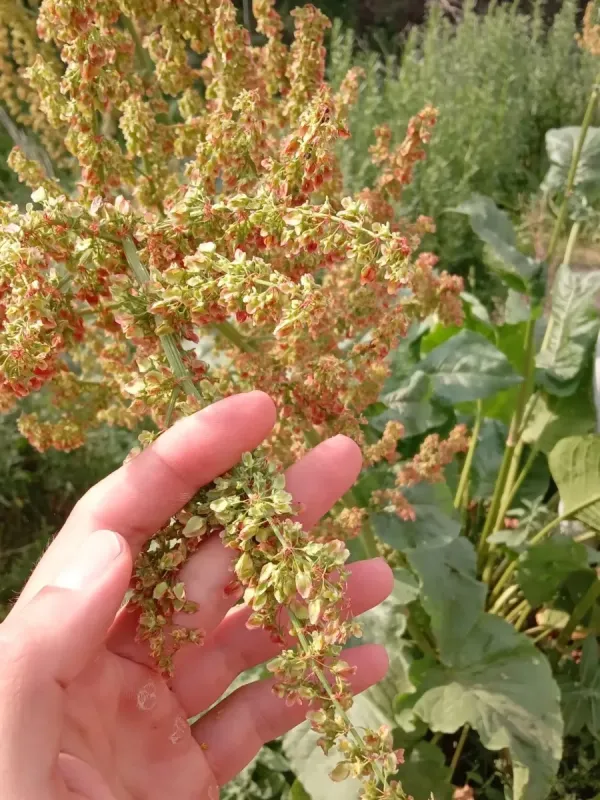
Description
Sowing dates
Tianshan sorrel is a perennial herbaceous plant belonging to the Polygonaceae family. This species is valued for its hardiness and ability to produce early spring greens, making it a viable candidate for commercial cultivation in various climates.
Sowing in open fields is typically performed in early spring when soil temperatures reach 3–5 degrees Celsius. Autumn or pre-winter sowing is also a viable option to ensure faster germination and earlier harvest the following spring.
The seeding rate is approximately 8–10 kilograms per hectare for row cropping. Seeds should be sown at a depth of 1.5–2 centimeters to ensure adequate moisture contact, which is crucial for uniform germination of small seeds.
Successful establishment requires a well-tilled, weed-free seedbed. During the first year, Tianshan sorrel grows slowly as it prioritizes root system development, so weed control is essential for young plant survival.
Once established, the plants develop strong root systems and dense leaf rosettes. Proper spacing allows for sustained, high-quality production for 4 to 6 years, reducing the need for frequent replanting and field preparation.
Growing requirements
Tianshan sorrel thrives in environments with consistent moisture availability. It prefers fertile loamy or sandy loam soils that possess a neutral to slightly acidic pH level for optimal nutrient absorption.
While the crop requires ample water, it is sensitive to waterlogged conditions. Fields must have good drainage to prevent rhizome rot, especially during the dormant season or periods of excessive rainfall.
The crop performs best in full sun, which maximizes leaf growth and nutrient content. Although Tianshan sorrel can tolerate partial shade, sunnier locations lead to significantly higher yields of high-quality, vibrant green leaves.
Soil preparation involves the application of organic matter, such as compost or well-rotted manure, at 30–40 tons per hectare before planting. Supplementing with nitrogen, phosphorus, and potassium is necessary for robust growth.
Throughout the growing season, irrigation is vital. After each harvest cut, nitrogen-rich fertilizers are recommended to promote rapid regrowth of the leaves, ensuring that the plant recovers quickly for the next harvesting cycle.
Yield
The yield of Tianshan sorrel depends heavily on intensive care and harvest frequency. With proper agronomic management, growers can perform 3 to 4 major harvests throughout the growing season.
The biological potential of this species allows for a yield of 20–30 tons of fresh greens per hectare under professional management. The quality of the harvest is dictated by the timing of the cutting and moisture management.
In the first year, yields are modest as the plants dedicate resources to establishing their root architecture. Productivity peaks significantly in the second and third years, providing the best return on investment.
To preserve yield and quality, growers must prevent flowering. As the plant approaches the reproductive stage, leaf quality drops; thus, early removal of floral stalks is a standard procedure to maintain the desired leaf texture.
Maintaining optimal plant density and healthy soil conditions are essential for long-term productivity. Periodic soil testing and targeted nutrient applications help keep the plantations performing at their maximum capacity.
Main diseases and pests
Fungal diseases such as rust and leaf spot are the primary threats to Tianshan sorrel, particularly in humid climates or crowded plantings where air circulation is poor. Keeping rows clear helps minimize infection risks.
Pests, including the sorrel leaf beetle and various aphid species, can cause substantial damage to leaf surfaces. These pests reduce the marketability of the crop and weaken the plants by impacting their photosynthetic capacity.
Integrated pest management, including crop rotation and proper sanitation of fields, is the most effective way to handle disease and pest pressures while minimizing the need for heavy chemical applications.
When chemical intervention is required, growers must carefully follow pre-harvest intervals to ensure the safety of the produce. Biological controls are increasingly preferred for maintaining the organic standards of green crops.
Regular field scouting is critical for early detection of potential outbreaks. Addressing pest issues at the onset prevents them from spreading throughout the entire plantation, safeguarding the year's harvest.
Harvesting
Harvesting is initiated when leaves reach a standard length of 10–15 centimeters. Careful cutting that preserves the central growing point of the plant is vital to guarantee future harvests and prevent plant damage.
Manual harvesting with specialized knives or sickles is common for smaller fields, while larger industrial operations may employ mechanized harvesting equipment calibrated for the specific height of the leaves.
Immediate post-harvest cooling is required to prevent the wilting and browning of leaf margins. Keeping the harvested greens at temperatures between 0 and 2 degrees Celsius significantly extends their shelf life.
Transport containers must be ventilated to prevent heating and spoilage within the bins. Ensuring a smooth supply chain from the field to the retailer is essential to maintaining the high quality expected by consumers.
The final harvest of the season should conclude at least 3–4 weeks before the first hard frosts. This timeframe allows the plants to store adequate carbohydrates in their roots, ensuring a successful transition into winter dormancy.